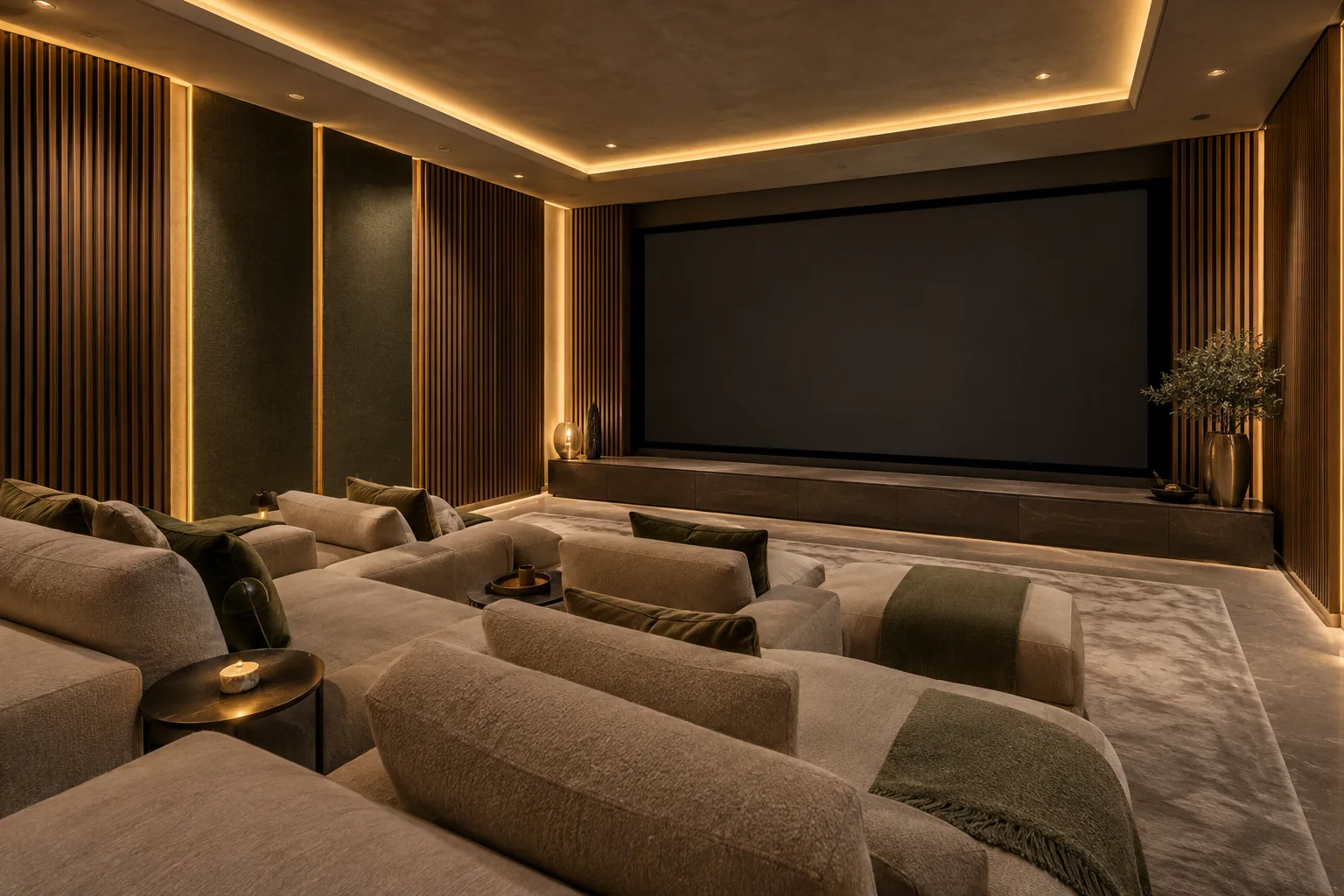
A home cinema should work for the room and the people who use it. For a Dubai villa, the first decision is rarely a projector model. It is whether the space will be a dedicated cinema, a family living room, or a room that changes between entertainment and everyday use. That choice affects almost every part of the brief.
Start by describing a typical evening: how many people watch together, what they watch, where they sit and whether others will be sleeping or working nearby. This guide helps turn that description into a practical specialist discussion. Our home cinema and multiroom audio service connects entertainment requirements with lighting, shading and the wider home plan.
Choose the room's main purpose
A dedicated room can be planned around the viewing experience. A living room must also support conversation, daylight, circulation and the interior scheme. Neither approach is automatically better; the important thing is to agree the priority before equipment and furniture are ordered.
Write down the activities the room must support. Include films, television, gaming, music and ordinary family time where relevant. Then rank them. If daytime viewing is essential, say so. If the household values a discreet interior more than a visible equipment display, make that a design requirement. Clear priorities help the specialist explain the compromises honestly.
Plan seating and sightlines together
Discuss the seating layout before settling on the screen. The room dimensions, viewing positions, circulation routes and furniture affect what feels comfortable. Ask the cinema designer to show the proposed arrangement and explain how different seats experience the screen and sound.
Consider practical details such as access around furniture, where remotes are kept and how guests move through the room. A drawing that looks attractive from above should also work when the household is actually using it. If the room has several functions, ask how furniture placement supports each one without repeated rearrangement.
Decide how daylight will be managed
Daylight belongs in the initial brief because it affects the room experience and the choice of display. Ask the specialist to assess the actual windows, likely viewing times and the preferred interior treatment. Do not assume that any large screen will perform equally in every room.
Coordinate curtain tracks, blinds, recesses and power with the interior team. If a film scene is intended to close shading automatically, identify exactly which motors and controls are included. Our motorized curtain planning guide explains why tracks, fabric and installation need separate attention. The decorative fabric and the control system may be supplied by different businesses.
Treat sound as a room decision
Ask the specialist to assess the room rather than beginning with a speaker count. Speaker positions, finishes, furniture and the intended listening experience all belong in the discussion. A concealed solution also needs a plan for servicing and access after installation.
Distinguish the sound experienced inside the room from sound reaching neighbouring rooms. They are different design concerns. If late-night viewing is important, explain where people sleep and what disturbance the household needs to avoid. The appropriate specialist should assess any acoustic treatment or building work; decorative panels alone should not be accepted as a complete acoustic specification.
Give the equipment space to work
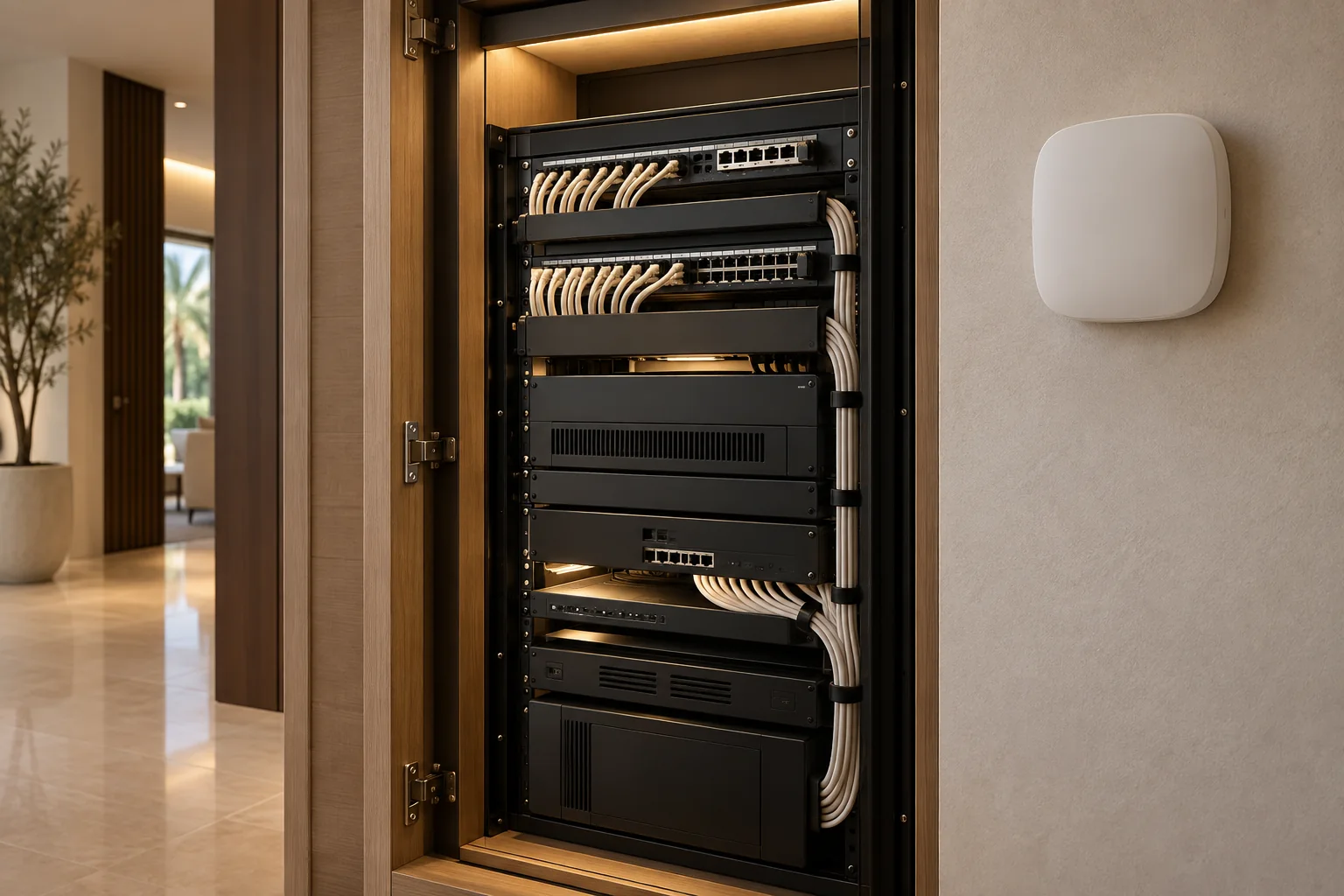
A premium room can look simple while relying on several pieces of equipment. Decide where they will be located, how they will be accessed and who coordinates ventilation, power and cable routes. Avoid leaving that decision until the joinery is complete.
Ask for an equipment schedule that identifies each component and its purpose. If equipment is hidden remotely, establish how the household operates it and how a technician can reach it. Include cable labelling and the agreed documentation at handover. An elegant finish should not make ordinary maintenance unnecessarily difficult.
Make the control experience specific
Describe what the main controls should do in ordinary language. “Watch a film” might mean selecting the agreed source, adjusting lights and closing the specified shading. “Finish” might restore a comfortable light level without unexpectedly switching off another room's music. The exact actions need agreement and compatibility checks.
Manufacturer material such as Control4's whole-home overview illustrates how entertainment can be combined with other home controls. That does not mean every product combination supports every routine. Ask the appointed installer to confirm the actual integration, account requirements and ongoing charges for the proposed system.
Consider music beyond the cinema
If you want music elsewhere in the villa, list the rooms as separate audio zones. Decide which should play together, which need independent sources and which should remain private. Include outdoor spaces only where an appropriate specialist has assessed the equipment and installation conditions.
Discuss the streaming services and devices the household already uses. Confirm current regional availability, account ownership and any required subscriptions before purchase. Keep the ordinary controls simple enough for family and guests. A long feature list is less useful than a clear explanation of how someone starts music in the kitchen without affecting the study.
Coordinate lighting and networking early
Entertainment, lighting and networking should be designed as connected parts of the brief. The lighting specialist needs to understand the viewing and circulation requirements. The network specialist needs to understand the equipment, streaming expectations and any other simultaneous household activities.
Explore smart lighting planning and home network planning before finalising the scope. Include physical operation in the room as well as app control. Guests should not need an unfamiliar account or a lengthy explanation just to turn on a light or adjust the sound.
Compare proposals against the same experience
A cinema quotation should separate equipment, acoustic work, furniture, finishes, cabling, programming and training. Identify exclusions and who is responsible for them. Confirm whether the proposal is based on a completed survey or assumptions that still need to be checked.
Our villa automation quote checklist provides a useful starting point for responsibilities and handover. Apply the same discipline to entertainment: compare equivalent room requirements, not simply two total prices. Ask how substitutions, delays and changes will be agreed before they affect the wider renovation programme.
End with a real household demonstration
Handover should include the people who will use the room. Walk through source selection, normal volume, lighting scenes, shading and the agreed recovery steps after an interruption. Record unresolved items and the support contact, including what is covered and what creates an additional charge.
A successful brief makes the everyday experience clear from the beginning. Tell Duneva about your cinema or audio project, including the property, project stage, main room and how you want to use it. We will help frame a coordinated specialist discussion around the home you are creating.