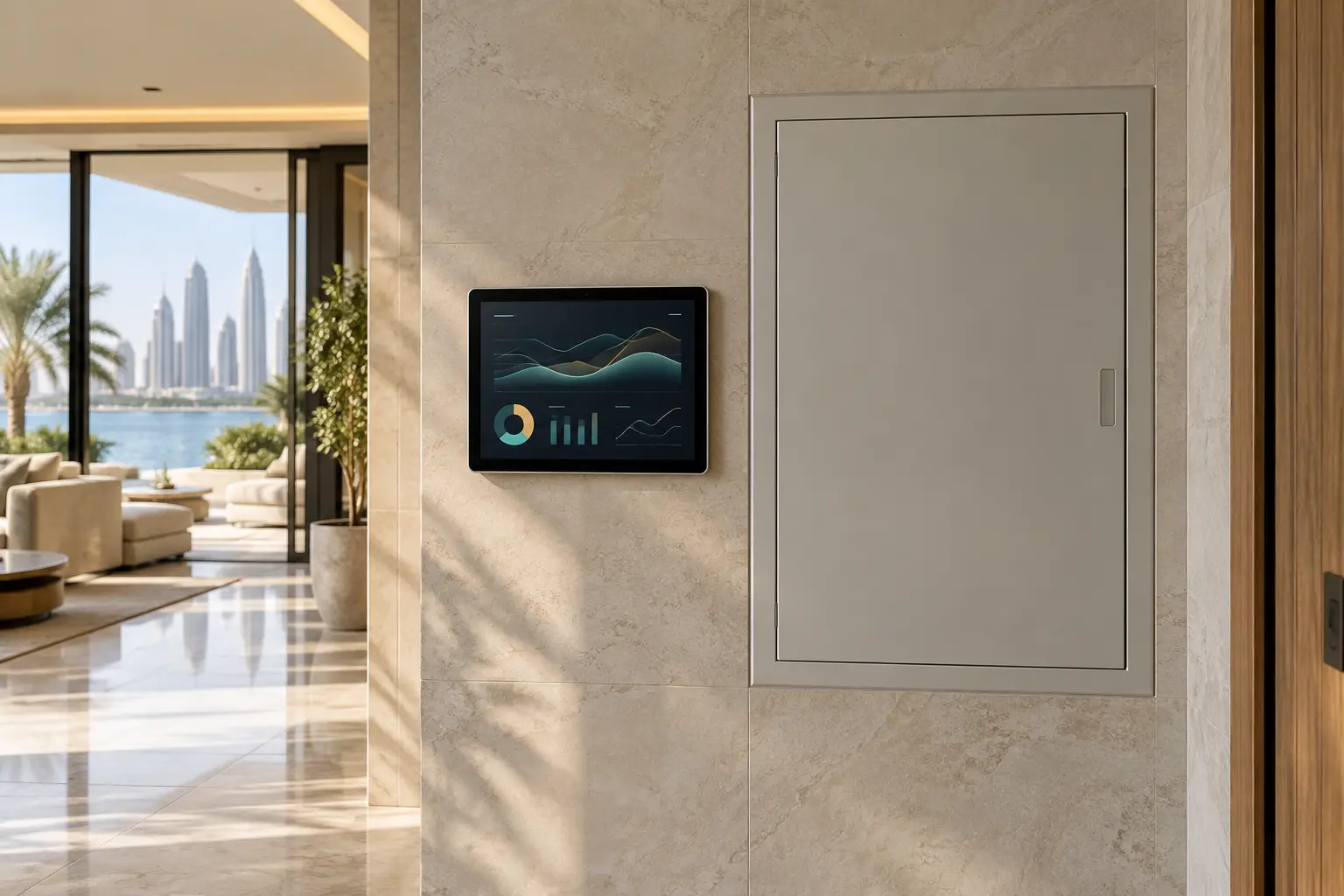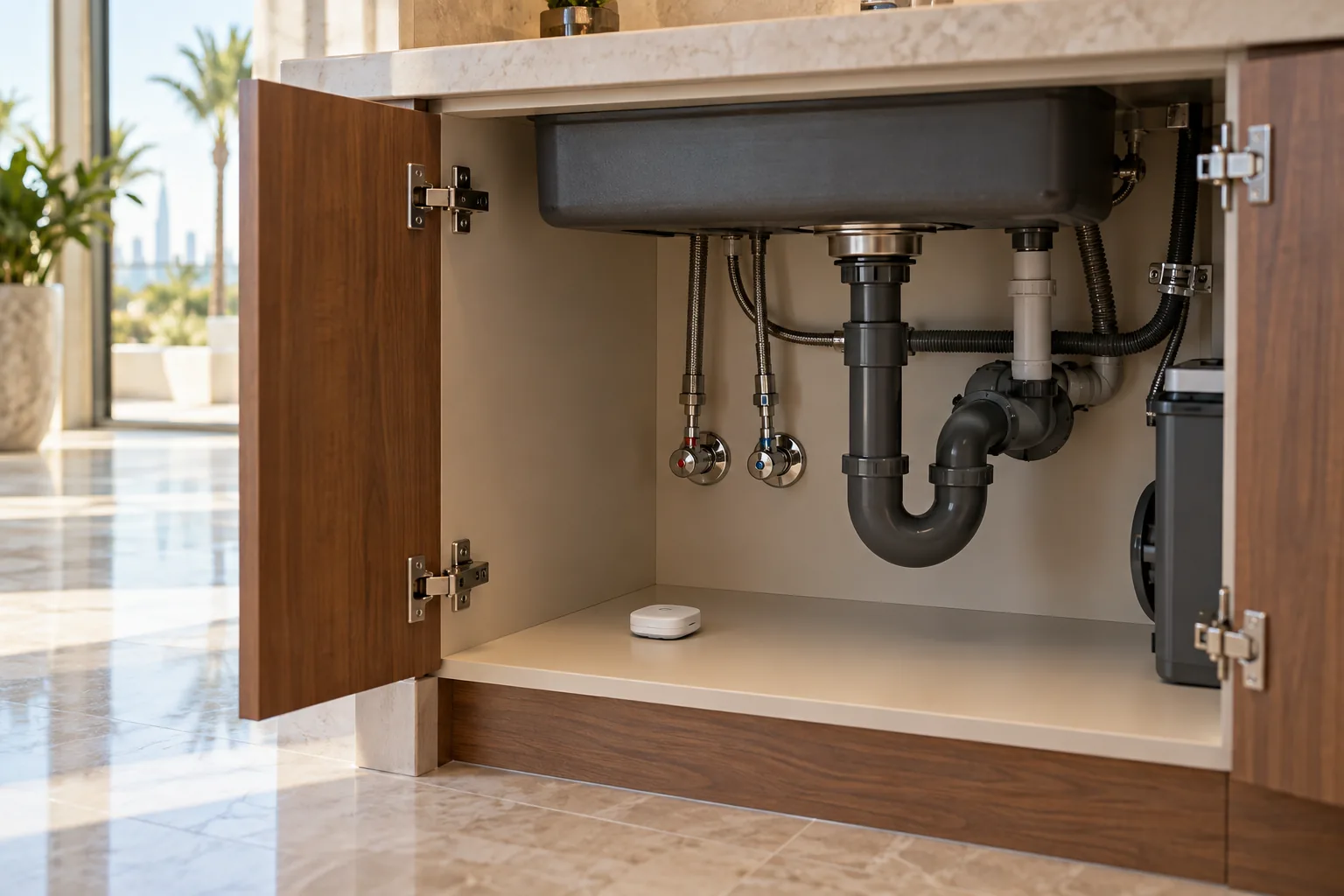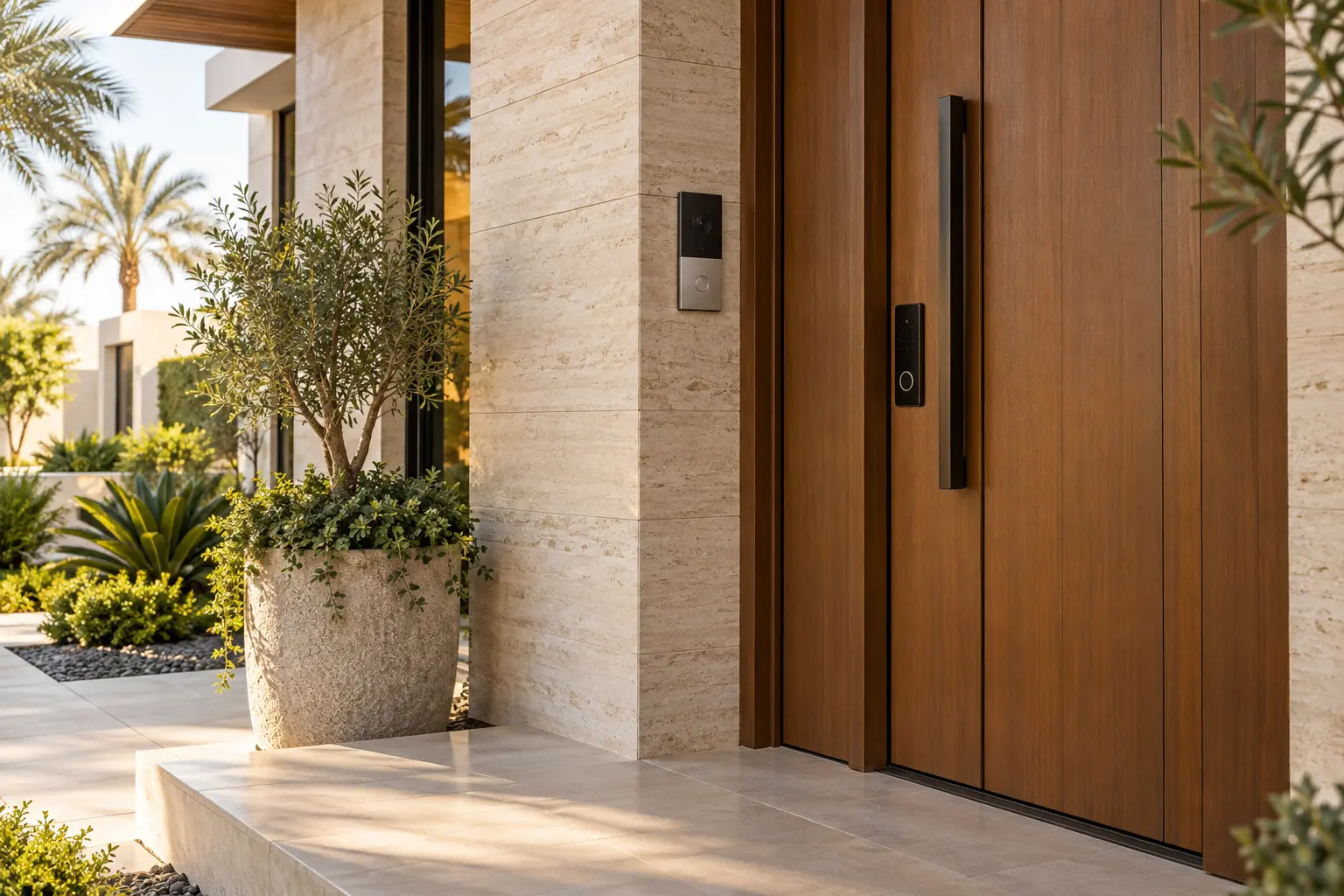
A smart entrance should make daily arrivals simpler without making the household dependent on one phone, one cloud service or one person who knows how the system works. For a Dubai villa, the useful starting point is the complete route from the community gate or driveway to the front door. The door, lock, intercom, network, power, visitor process and physical fallback all need to fit together.
This guide turns that route into a practical planning brief. It does not recommend a universal lock or promise that an existing gate can be connected. Our smart access and security planning service can help organise the requirements before a specialist surveys the property.
Map every entrance before choosing equipment
List each place where a resident, visitor, delivery driver or household employee might enter: a vehicle gate, pedestrian gate, front door, side door, garage connection and service entrance. Give every opening a name that the household and contractors will use consistently. “Front door” is clearer than “door one” when an alert arrives.
For each entrance, record the existing door or gate material, locking method, power, nearby network coverage and the way it is used today. Include people who may not carry a smartphone. Children, guests, cleaners, maintenance teams and older relatives can need a different access method from the owner. A product list made before this map often solves the easiest door while leaving the real visitor journey unresolved.
Separate the door, the lock and the automation
A smart lock is only one part of a secure opening. The door, frame, hinges, latch alignment and closing force must allow the lock to operate correctly. A specialist should inspect the actual opening and confirm whether the proposed hardware suits it. Automation cannot correct a door that does not close or latch reliably.
Ask the proposal to distinguish mechanical work, lock hardware, power or batteries, gateway equipment, programming and making good. If a fire-rated or managed-building door is involved, confirm the relevant property and specialist requirements before changing its hardware. Do not assume that a retrofit advertised for one door type will suit another.
The automation layer should receive only the functions that the exact lock or gate interface supports. “Works with Apple Home”, “Matter compatible” and “supports a keypad” describe different capabilities. Apple’s current home key instructions make this distinction explicit: not every Home-compatible lock supports home key or guest access codes. Verify the precise model, region, firmware and account setup before purchase.
Design the visitor journey from outside
Stand where a visitor would stand. Can they find the call button after dark? Can residents hear and answer the intercom in the rooms where they spend time? Is there a clear distinction between calling the house and entering a code? Check the camera view during daylight and at night, without pointing unnecessarily into neighbouring property or private spaces.
Write down what should happen after a call. The household may want a phone notification, an indoor station, a chime or more than one option. Decide whether the person answering can release only the pedestrian gate, only the door or both. Avoid a single “open everything” action unless it is deliberately required and assessed. The intercom, gate contractor and automation specialist should agree their separate responsibilities.
A monitored alarm or police-connected service is a different scope from a residential doorbell notification. The Dubai Police Home Security FAQ describes its own monitored service and homeowner-controlled camera access. Use the exact provider’s documents for any monitored-security requirement; a general smart-home routine must not be presented as an emergency-response service.
Give each person the minimum useful access
Create access roles before creating codes. A resident may need all entrances at all times. A regular household employee may need one entrance during agreed hours. A short-term guest may need temporary access. A contractor may need supervised entry rather than a reusable credential. The selected system must actually support the rules you intend to use.
Use individual credentials where the equipment supports them, rather than sharing one family code. Agree who may add or remove users and who receives notifications. Keep a simple register of active access methods without putting codes or passwords into the general project document. When someone no longer needs access, remove their credential and check that the change has reached the lock or controller.
Apple’s documentation notes that supported locks can allow guest codes to be changed or removed. That is a product capability, not evidence that every lock offers the same controls. Ask for the required guest workflow to be demonstrated on the specified hardware before acceptance.
Plan for low batteries, outages and lost phones
Every entrance needs a recovery plan. Ask what the lock does when its battery is low, how warning is shown, how batteries are replaced and whether the replacement can be completed while the door is closed. Confirm any emergency power option directly from the model’s official instructions. Do not improvise power connections at the entrance.
Then test the dependencies separately. What happens when the home internet connection fails? What happens when Wi-Fi is available but the vendor’s cloud service is not? What happens during a property power interruption? Read our guide to a smart home without internet and ask the installer to document the answer for each agreed entrance.
Keep a dependable physical method of entry under the household’s control, appropriate to the chosen hardware and property. Decide where spare mechanical keys or approved recovery devices are held without publishing that information or leaving it in an obvious location. A lost phone should trigger account and credential review, not force the household to replace the whole system.
Coordinate power, network and finishing early
New intercoms, gate interfaces and cameras can need cables, power supplies, network connections and protected equipment locations. These are easier to coordinate before stone, joinery, paint and landscaping are complete. Ask the specialist to mark the routes and equipment positions on the entrance elevation or plan.
Outdoor equipment must be selected for its actual exposure and installed using the manufacturer’s requirements. A shaded porch, boundary gate and open driveway are not the same environment. The proposal should also identify who seals penetrations, repairs finishes and provides safe access for later service.
Reliable network coverage at the door does not prove coverage at the gate. Include both in the network survey, and decide which functions must continue locally. If the entrance is part of a larger renovation, the villa automation quotation checklist can help separate equipment, installation, programming and exclusions.
Use an entrance acceptance test
Before handover, run the same short test with a resident, a temporary guest and the person responsible for support. Check normal entry, a visitor call, remote answering where specified, a temporary credential, credential removal, low-battery indication and the agreed fallback. Test physical opening from inside so automation never obscures the normal exit method.
Confirm that door names and notifications are understandable. Review camera visibility and privacy settings. Record the owner administrator account, installed model numbers, battery type, support contact and maintenance responsibility through a secure handover. Our smart-home handover checklist covers the wider account and documentation process.
The finished entrance should be easy to explain in a few minutes. If a guest cannot call the household, a resident cannot open the door without an app, or nobody knows how to recover from an outage, the design is not complete.
Prepare a useful survey brief
Bring the entrance list, household roles, desired visitor journey, photographs of the hardware from safe viewpoints and any available gate or intercom documents. Do not send access codes, passwords or detailed security information through the initial enquiry form. A site visit should confirm the physical openings, interfaces, cable routes and permissions before equipment is ordered.
Request a Dubai villa access assessment to turn the entrance journey into a clear specialist brief.