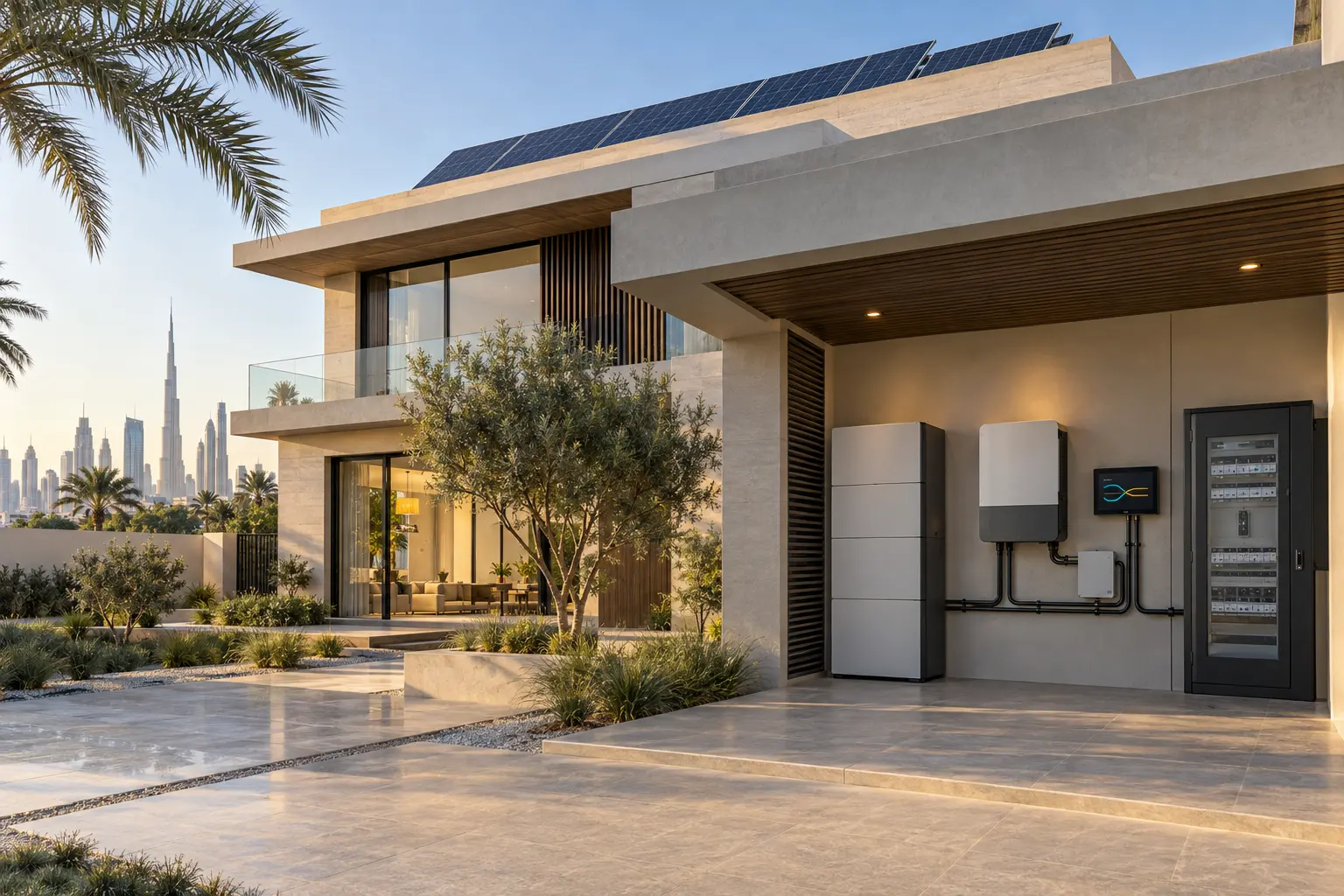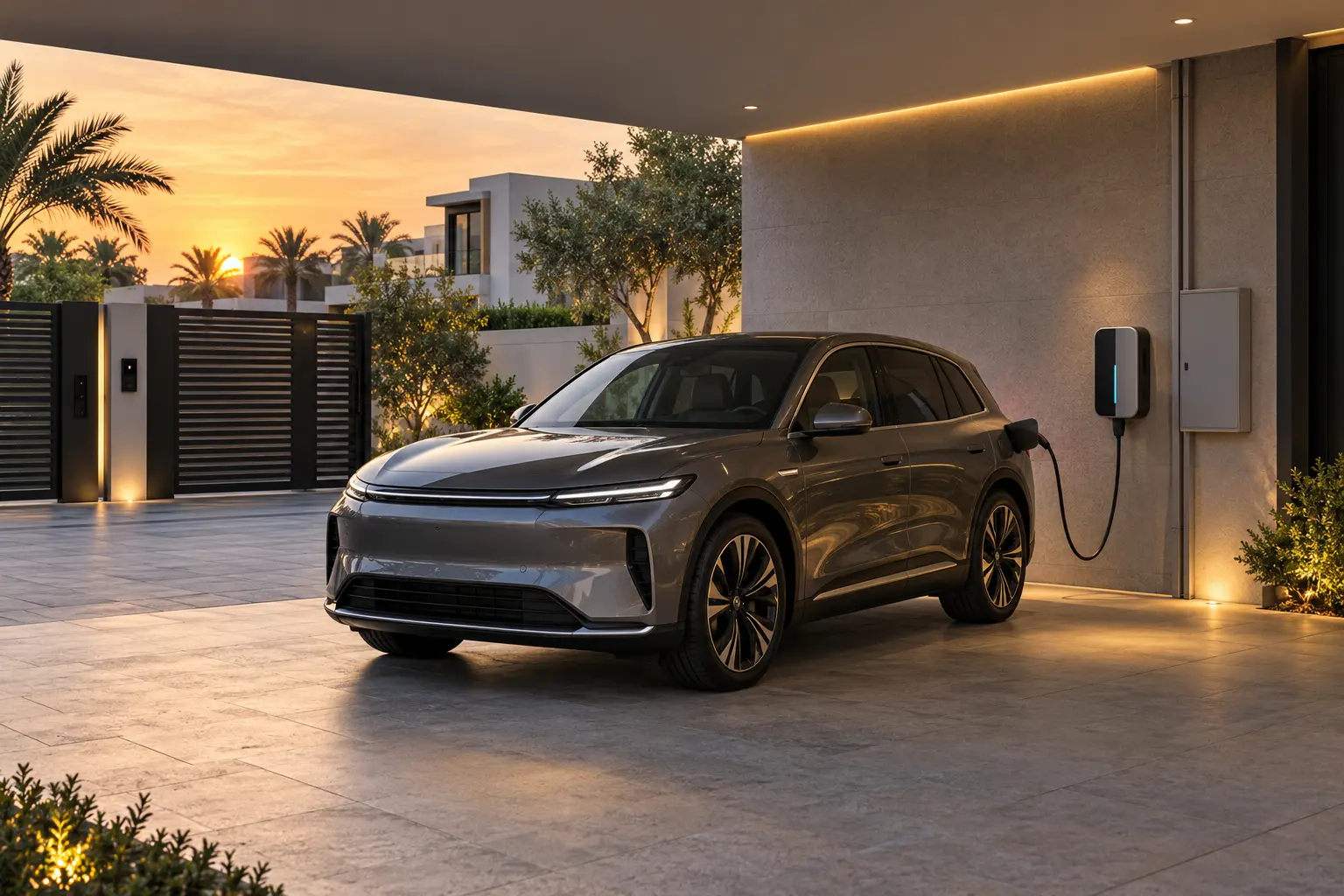
EV charging, a garage door and a vehicle gate may share one arrival journey, but they are not one system. The electrical contractor, charger specialist, gate supplier, network team and automation integrator each own different safety and operating responsibilities. A useful plan coordinates their interfaces without letting a convenient phone scene bypass the controls that protect people, vehicles and equipment.
This guide helps Dubai villa owners and fit-out teams prepare that coordinated brief. Duneva's smart energy monitoring service can help connect energy visibility and agreed owner controls with the wider villa automation while the appointed electrical and equipment specialists retain their responsibilities.
Map the vehicle journey first
Walk the route from the street to the final parking position. Mark the vehicle gate, waiting area, garage door or shutter, turning space, charger position, pedestrian route and the point where a driver normally stops. Include the departure journey and any service or visitor parking.
For each step, state who initiates it and what confirmation they need. An owner may use a vehicle remote or approved access credential at the gate, then a separate garage control. A guest, driver or maintenance provider may require narrower access. Avoid designing an automatic open sequence before checking sight lines, public-road conditions, safety sensors and the equipment manufacturer's approved controls.
Use the smart entrance planning guide to document access roles, intercoms and outage behaviour. A smart-home interface may present status or issue an authorised command, but the gate and garage specialists must define safe motion, obstruction detection, emergency release and local control.
Confirm electrical capacity before choosing charging speed
Ask a DEWA-approved electrical contractor to survey the villa supply, distribution boards, existing large loads, earthing, cable route and proposed charger location. The answer should be based on the actual property, not only the maximum rating printed on a charger.
DEWA's current EV charging guidance explains that home charging equipment can be installed behind the customer's meter and says customers should use DEWA-approved electrical contractors. The appointed contractor must confirm the current application, installation, inspection and equipment requirements for the specific property.
Create an electrical schedule showing the dedicated circuit, protection, isolation, distribution-board position, cable route and measured or calculated capacity. Keep mains design and certification with the qualified electrical team. Do not promise a charging time until the vehicle, charger, supply and configured limit are known.
Decide whether load management is needed
A villa may have several significant electrical loads, including cooling, cooking, water heating, pool equipment and more than one vehicle. The contractor and charger specialist should decide whether a fixed charging limit is sufficient or whether a supported load-management system is appropriate.
Tesla's current Wall Connector power-management guidance describes product-specific options for a fixed site limit, dynamic monitoring of available panel capacity and load sharing between supported connectors. This is one manufacturer's architecture, not a universal feature. Verify exact charger, sensor, firmware, network, vehicle and UAE-market compatibility before specifying it.
If load management is used, document the measurement point, fail-safe limit, communications path, response when data is unavailable and the person allowed to change the configuration. The home-energy monitoring guide helps separate whole-home context from a utility meter or a charger controller.
Put the charger where daily use works
Check the inlet location on the current vehicle and reasonable future parking orientations. The cable should reach without being stretched across a pedestrian path, trapped by a door or left where a vehicle can drive over it. Provide a deliberate holder for the cable and connector.
Review wall construction, mounting height, impact risk, drainage, heat, direct sun, dust and any outdoor exposure with the manufacturer and contractor. Confirm required clearances and service access. If a bollard or barrier is proposed, coordinate foundations and vehicle movement before finishes are installed.
ChargePoint's current home-charger pre-installation guidance asks owners to check Wi-Fi, electrical-panel space and capacity, charger rating, and plug-in versus hardwired arrangements. These are useful planning questions, but the selected product's own installation manual and local project requirements govern the final design.
Plan network and account ownership
Some chargers use Wi-Fi or another connection for setup, scheduling, usage information, firmware or support. Survey signal strength at the installed position and decide whether the device belongs on a dedicated home-technology network.
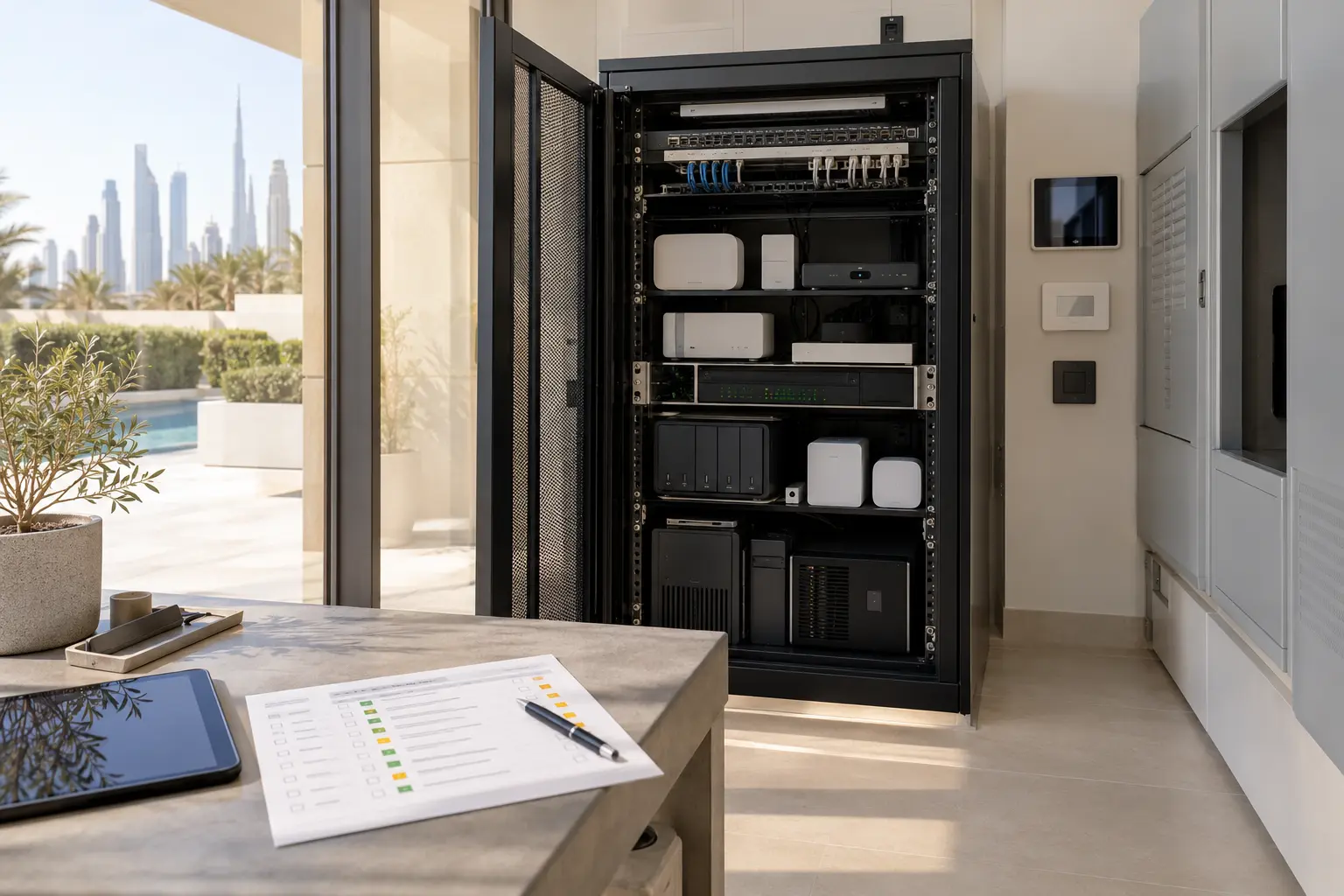
The villa Wi-Fi and network checklist covers cabling, access-point placement, equipment ownership and handover. Record what charging functions remain available if the internet or local network is down. The ability to charge locally, view status remotely and receive updates may have different dependencies.
Create the charger account in the owner's approved name or household structure, not only in an installer's personal account. Record who may add vehicles, change schedules, view energy data or invite another driver. Do not share one owner password with household staff or short-term users.
Coordinate gate, garage and lighting without unsafe shortcuts
An arrival routine can prepare driveway and garage lighting, present gate status and make charger information easy to find. It should not silently open moving equipment because a phone enters a wide geofence. Require an intentional authorised action where the gate or garage specialist specifies one, and display status only when the underlying sensor is reliable.
Separate convenience automation from certified safety behaviour. Obstruction sensors, emergency releases, fire or life-safety requirements and equipment protection remain with their dedicated systems. If an automation command is allowed, document whether it is open, close, pulse or hold; how the system confirms the result; and what happens when the state is unknown.
Use lighting that supports the camera view, pedestrian route, charger connection and reversing manoeuvre without causing glare. Keep a physical control at the garage or service entrance, and make the exit path usable during a smart-home or internet fault.
Design schedules around the household, not assumptions
Decide whether charging begins immediately, follows a vehicle schedule or uses a supported utility or charger programme. The owner should be able to override a schedule when the vehicle is needed sooner and understand whether that override applies once or persists.
Do not hard-code a routine around one car if the parking arrangement may change. Record connector type, vehicle compatibility and any adapter or access restrictions for the actual equipment. If two vehicles may charge, specify whether the circuits and charger system support simultaneous operation, alternate operation or shared capacity.
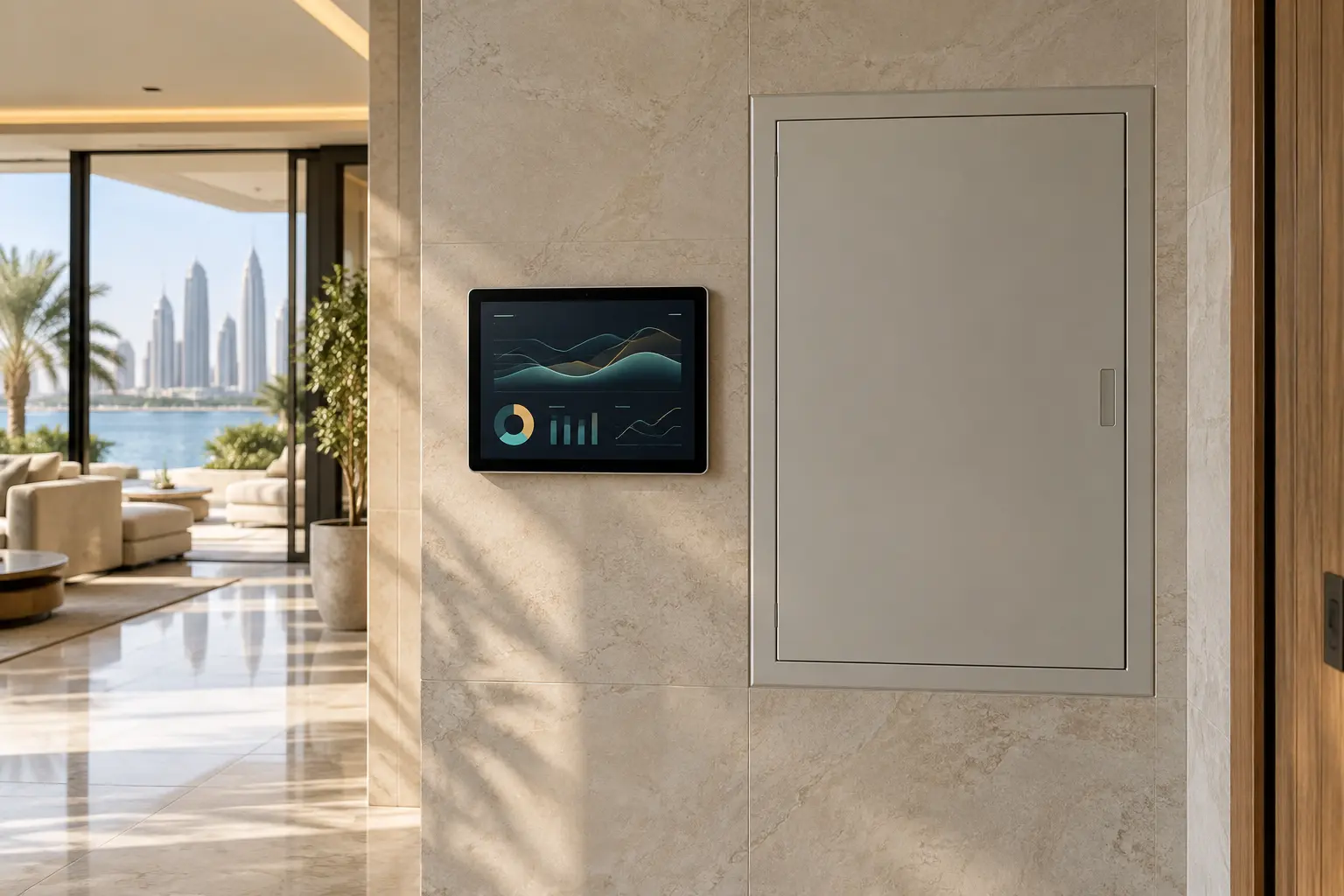
Energy dashboards should use plain labels such as garage EV charger and distinguish measured consumption from estimates. Avoid claiming a saving simply because charging moved to a different time; tariffs, demand, vehicle use and other loads determine the result.
Plan power loss, manual operation and recovery
Write down what happens during a utility interruption, local breaker trip, network outage and controller restart. The charger may stop and require a vehicle or app action, while the gate and garage door have separate manual-release procedures. Test only through methods approved by the appointed specialists.
Do not connect a high-power vehicle charger to a small smart-home UPS. If the villa has backup power or solar, the electrical designer must decide whether charging is excluded, limited or supported and how transfer and load priorities work. The smart-home power-resilience guide helps document critical control and network loads separately from high-power equipment.
Keep emergency release instructions accessible to authorised occupants without publishing security-sensitive detail. After restoration, confirm which equipment resumes automatically and which requires inspection or a manual reset.
Commission the complete parking journey
Test owner arrival, authorised driver arrival, visitor handling, normal charging, scheduled charging, a one-time override and departure. Confirm gate and garage status, lighting, cable reach, charger indication, energy display and notification recipients. Then test loss of internet, loss of local network and removal of a user's access without creating unsafe gate movement or interrupting a real household journey.
At handover, retain the approved electrical documents, charger and circuit details, configured limit, load-management logic, gate and garage interfaces, network dependency, owner accounts, user permissions, vehicle compatibility, schedules, manual-release instructions, maintenance access and support responsibilities. Add them to the smart-home handover checklist.
A coordinated garage is predictable: the driver knows how to enter, the charger operates within the verified electrical design, and every connected feature has a manual and support path. Integration should make those boundaries clearer, not hide them.
Request an EV charging and garage coordination assessment with the property stage, parking arrangement and systems in scope. Do not send access codes, account passwords or detailed security plans in the initial enquiry.