A villa can lose useful water pressure for several reasons: the storage tank may be low, a booster pump may have stopped, power may be unavailable, an isolation valve may be closed, or maintenance may be under way. A smart-home screen can make selected status easier to understand, but it cannot diagnose every plumbing fault or prove that stored water is safe.
A useful plan therefore begins with responsibility. The plumber and pump specialist define the hydraulic design, protection, maintenance and safe operating limits. Approved water-system specialists handle cleaning, disinfection and water-quality work. Duneva’s water, leak and indoor-comfort coordination service can help present agreed status and alerts within the wider home while keeping those specialist boundaries visible.
Map the complete water journey
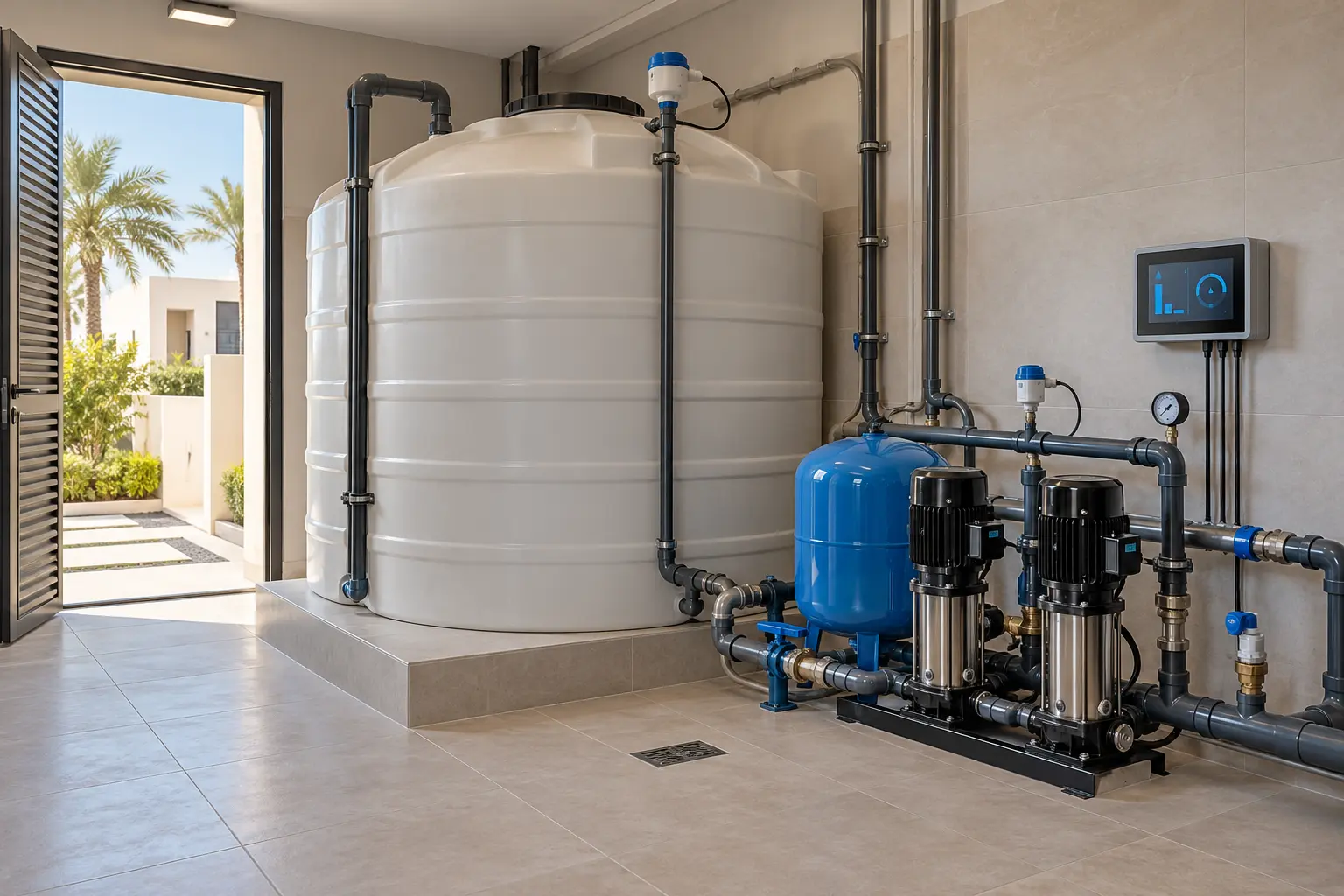
Draw the path from the utility connection to the storage tank, booster set, distribution branches and important uses. Include tank compartments, float or inlet controls, isolation valves, strainers, pressure vessels, duty and standby pumps, electrical isolators, drains and any existing controller. Label what belongs to the utility, building, landlord, owner or specialist contractor.
Do not begin by adding sensors. First ask what the household actually needs to know. Common questions are whether adequate stored water is available, whether the booster system is healthy, whether pressure is outside its agreed band, and whether a fault needs a specialist visit. Each question needs a reliable source and a safe response.
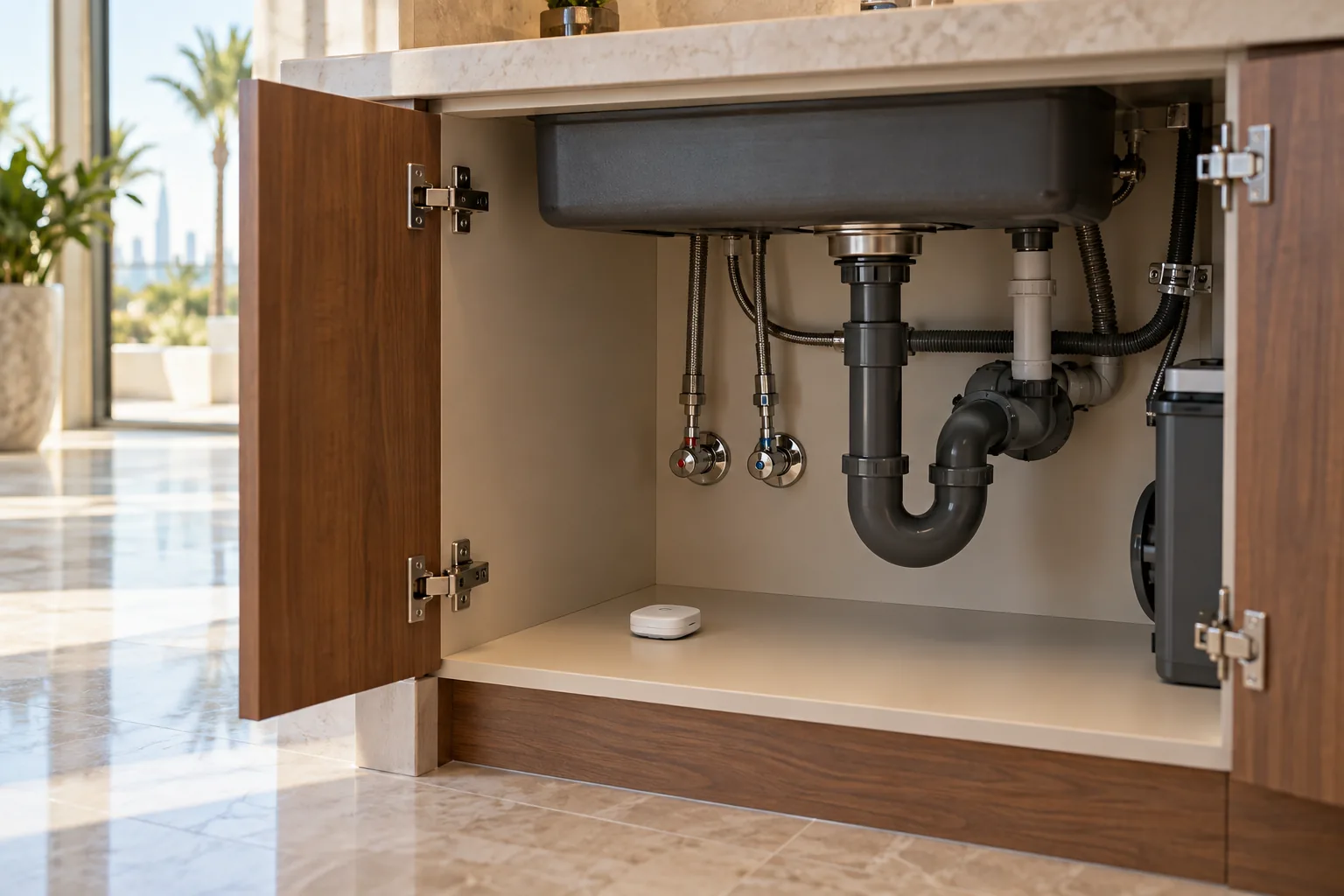
The smart water-leak detection guide covers local leak sensors and shut-off assessment. Tank level, pump status and leak detection are related, but they are not interchangeable. A dry floor does not prove the tank is full, and a full tank does not prove the distribution system has no leak.
Separate level, pressure, flow and pump state
Use plain names for different measurements. Tank level describes stored volume or an approximate range. Pressure describes conditions at a selected point. Flow describes movement through a pipe. Pump run status reports that a motor or controller has been commanded or detected as operating. A fault contact reports the state defined by that controller.
Do not turn one reading into a conclusion it cannot support. A low level may reflect normal consumption, delayed supply, a stuck inlet control, cleaning or a leak. A running pump may be restoring pressure rather than indicating a fault. A pressure drop may occur when several outlets are used together. The specialist should define normal ranges and delays from the actual system.
Where a tank sensor is considered, confirm that it is suitable for the tank material, water use, environment and maintenance method. The sensor and cable must not create a contamination route or obstruct cleaning. Keep any intrusive work with the appointed water-system specialist.
Preserve water-hygiene responsibilities
Dubai Municipality’s Safe Water for a Healthy Community initiative advises residents to clean and disinfect water tanks and plumbing systems at least every six months using companies approved by the municipality. Its Health and Safety approved lists provide the current route for checking accredited cleaning and disinfection providers.
Automation should support this programme, not replace it. A level sensor does not test biological or chemical water quality. A temperature reading does not certify the system. A maintenance reminder is only a reminder until the appointed company completes the work and the owner retains the appropriate record.
Plan a safe maintenance mode. It can suppress expected low-level or pump-off notifications during an approved service window while keeping a clear indication that monitoring is paused. It should not bypass pump protection, hide an unrelated leak alarm or automatically restart equipment before the specialist confirms the system is ready.
Use pump data the controller can genuinely provide
Read the exact pump and controller documentation. Some domestic boosters expose run, standby or alarm contacts; some provide app or network information; others offer only local indicators. Do not assume that a current sensor or smart plug can replace the manufacturer’s controller.
Grundfos explains that dry-running protection is an important monitoring function because running without water may damage pump components. Its UAE information for the SCALA2 booster lists product-specific functions including dry-run protection, leak detection and a maximum-run alarm. These examples are not universal features or a product recommendation. Verify the installed model, configuration, water source and approved interfaces.
Let the pump system perform its certified protective actions. The smart home may display a supported alarm and notify the correct person, but it should not invent a restart sequence. Repeated resets can worsen a fault or conceal the evidence a technician needs.
Design alerts around action
Create a short alert matrix. A low-tank warning might ask the owner to check whether planned maintenance or a known supply interruption is active. A critical-low condition could ask the household to reduce non-essential use and contact the water-system specialist. A pump fault might direct the owner to use the documented local fallback and support route. A possible leak should follow its own assessed response.
Use delays and escalation agreed by the specialists so that a momentary change does not create a flood of messages. The villa alert-escalation guide helps define severity, first recipient, evidence limits and the next safe step. Avoid sending every status change to every family member and household employee.
Notifications should say what is known: “booster controller fault active” is better than “pump broken.” Include the zone, time and supported source. Do not publish tank locations, plant-room access details or network addresses in a public notification.
Plan power, network and local fallback
Record which parts need mains power: the pump, controller, sensors, gateway, network switch and display may all have different supplies. The smart-home power-resilience guide can help separate monitoring loads from high-power pumps. Do not connect a pump to a small smart-home UPS unless the electrical and pump specialists have designed and approved that arrangement.
Decide what remains visible during a network or internet outage. Local pump protection should not depend on a cloud service. A physical pressure gauge, controller display and approved manual procedure remain valuable even when remote notifications are unavailable.
If the system reports through Wi-Fi, survey the actual service room rather than assuming coverage from nearby living spaces. Keep network equipment away from water exposure and preserve ventilation and service access.
Where the same utility zone also contains laundry equipment, coordinate the separate appliance, floor-sensor and ventilation questions with the smart laundry and utility-room planning guide. Tank or pump status should not be treated as proof that an appliance connection or floor area is dry.
Commission normal, fault and maintenance journeys
Test the real household journey with the appointed specialists. Record the normal tank level indication, pump changeover where applicable, pressure recovery and display labels. Simulate only safe controller inputs or approved test modes; do not drain a potable-water tank, interrupt a real household supply or create a pump fault merely to prove an automation.
Check a low-level warning, supported pump alarm, power interruption, network loss, notification acknowledgement and maintenance suppression. Confirm that cleared conditions return to normal without leaving a stale alert. Verify that duty and standby labels match the physical plant.
At handover, retain the water-path diagram, tank and pump details, sensor locations, normal ranges, alarm meanings, recipients, maintenance mode, power and network dependencies, approved cleaning route, support contacts and test record. Keep credentials and detailed access information in an owner-controlled secure record.
A good water-status page is intentionally modest. It distinguishes level from pressure, presents genuine pump information, preserves local protection and directs the household to a safe next action.
Request a Dubai villa water-system coordination assessment with the property type, existing tank and booster details, and the status questions you need answered. Do not send access codes, controller passwords or private plant-room security details in the initial enquiry.