A laundry or utility room is easy to overlook during smart-home planning. Yet it combines water, drainage, heat, humidity, high-load appliances, cleaning products and frequent short visits. Useful automation should make the room simpler to enter, operate and check without hiding essential functions behind an app.
This guide helps Dubai villa owners, interior designers and fit-out teams coordinate lighting, appliances, leak response, ventilation, power and notifications. Duneva's villa home-automation planning service can organise the interfaces while the appliance supplier, plumber, electrician, HVAC contractor and joinery team remain responsible for their systems.
Start with the room's real jobs
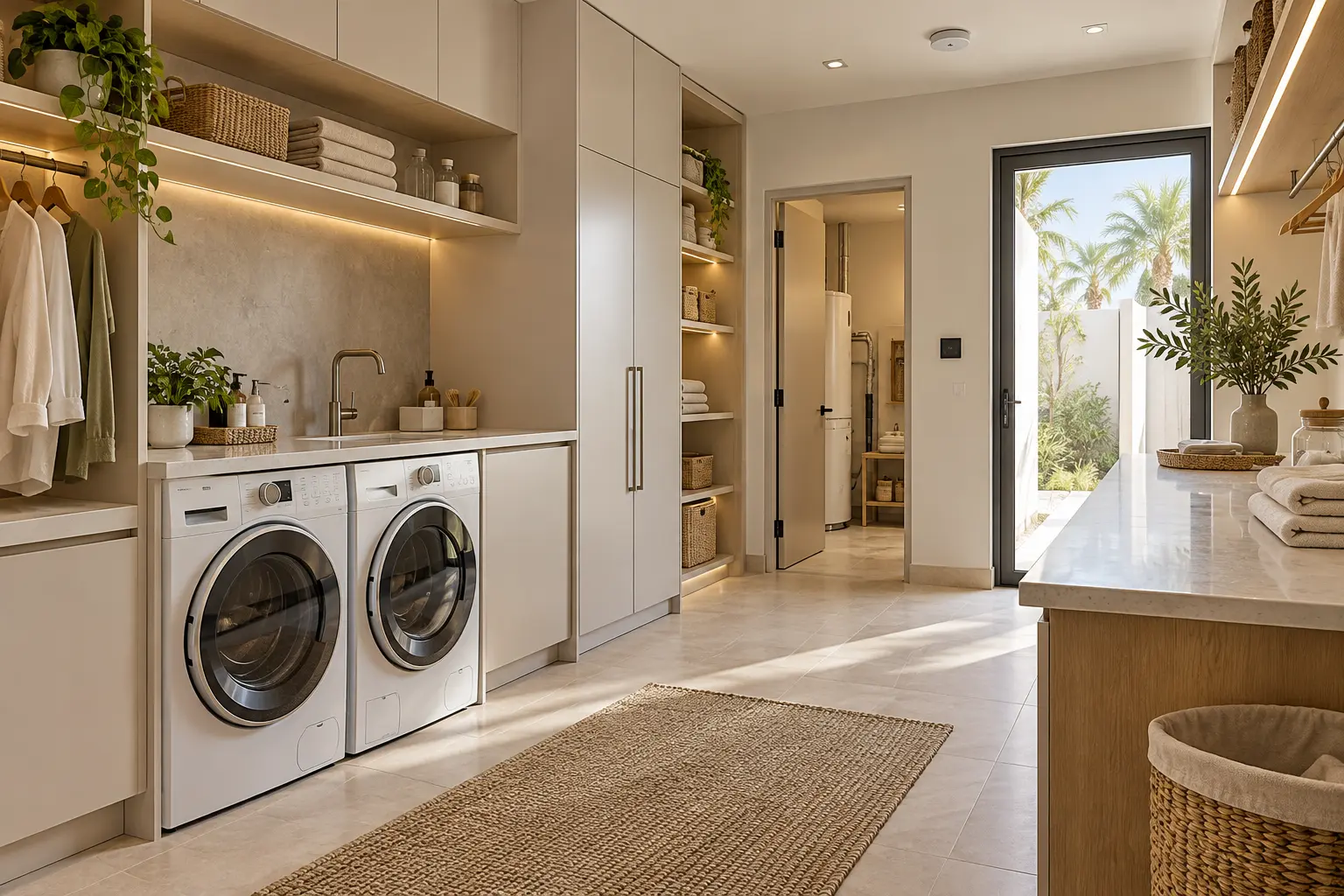
List what happens in the room before choosing devices. A main family laundry may handle sorting, washing, drying, ironing, folding, linen storage and cleaning supplies. A secondary utility room may also contain a service sink, water heater, distribution equipment or staff access. Record who uses each function and at what times.
Turn those jobs into a small number of understandable modes. Working could provide full practical light and an active ventilation request approved by the HVAC specialist. Quick Visit could illuminate the route and task area. Cleaning might bring every light to a useful level. Away could report selected faults without disconnecting appliances or equipment that must remain powered.
Keep local switches for important lights and fans. Household staff and guests should not need the owner's phone, account or voice profile to use a basic work room.
Coordinate the layout before automation
Freeze the washer, dryer, sink, folding surface, ironing position, tall storage, doors and circulation before placing sensors or keypads. Check appliance doors at their full opening angle, including a laundry basket in front of them. A sensor hidden by a tall cabinet or an inaccessible control behind an open door will not perform well.
Mark every socket, isolator, water connection, drain, floor waste, lighting circuit, fan, network point and sensor on the coordinated drawing. Keep appliance valves, traps, filters, drivers and access panels maintainable. The smart-home prewire checklist provides a broader method for cable routes, spare capacity and pre-close inspections.
Do not use automation to compensate for incomplete waterproofing, drainage or ventilation. The room's physical services must work independently before any smart layer is commissioned.
Make the lighting practical and obvious
Separate general, folding, sink, ironing and storage lighting where the room size justifies it. Aim for even illumination on work surfaces and inside deep storage. A single decorative pendant may look attractive but leave shadows over stains, labels or an ironing board.
Hands-free lighting can help when someone enters carrying linen. Lutron's current sensor and timer overview presents motion-controlled lighting as one option for laundry spaces. Treat this as a product example, not a specification or compatibility promise. Sensor type, field of view, time delay, manual override and lighting-load compatibility still need project checks.
Decide whether the room should use occupancy or vacancy behaviour. Automatic-on may suit a windowless service room; manual-on with automatic-off may be calmer where daylight is strong or the room opens from a bedroom corridor. Test someone standing at the folding counter or ironing board, not only a person walking through the doorway.
Treat washers and dryers as independent appliances
Create an equipment register with the exact model, electrical load, water and drainage requirements, network method, account owner, app, regional availability and supported commands. Similar-looking appliances in one range can expose different functions. A brand family name does not prove that a specific washer, dryer or combined unit can be controlled by the home platform.
Home Connect's current Middle East remote-start explanation notes that a washer or dryer may require local activation and that opening the door can disable remote start. This is a useful safety-boundary example. Always follow the exact appliance manual and preserve its controls, child locks, door interlocks and approved operating conditions.
Status can be more useful than remote start. A finished-cycle notification, door-open state or maintenance reminder may save time without starting machinery unattended. Decide which alerts matter, who receives them and when they should stop. Avoid sending routine notifications to every household member.
Plan water detection as a response system
Ask the plumber and appliance supplier to identify credible leak paths around inlet hoses, valves, the sink, water heater and floor drainage. Place sensors where water is likely to reach them and where they can be inspected. A sensor trapped under fixed joinery or directly beside routine splashes may be ignored or produce nuisance alerts.
Define the response before enabling a notification. Who checks the room? Which valve is safe to close? What must remain supplied? How is water restored manually? If automatic shut-off is considered, the plumber must confirm the valve, pressure, closure behaviour, bypass needs and recovery procedure. The water-leak detection planning guide gives a complete placement and acceptance checklist.
A smart sensor does not replace sound hoses, approved valves, waterproofing, drainage or planned maintenance. Record battery and functional-test dates in the smart-home maintenance calendar.
Keep heat and humidity responsibilities clear
Dryers, steam, hot-water equipment and Dubai's ambient conditions can make a small room uncomfortable. Ask the HVAC specialist to confirm the actual air path, extract arrangement, door undercut or transfer air, sensor position and approved control range. A general home temperature sensor does not prove that the utility room has adequate ventilation.
If humidity or temperature data is displayed, state what action it supports. A persistent change may prompt a visual check or service call; it should not be presented as a diagnosis. Preserve the dryer's own venting or condenser requirements and the HVAC system's protections. Automation may request an approved mode, but it should not invent fan logic that conflicts with specialist equipment.
Protect service access and storage
Separate everyday linen and cleaning storage from valves, distribution panels, network hardware and appliance service areas. Do not place shelves where they block airflow, filters or removable panels. Drivers, gateways and power supplies need labelled, reachable locations rather than being buried behind a stacked appliance.
If the utility room contains other building equipment, document those boundaries clearly. A laundry scene should not reset a water heater, close a plant-room valve or switch a shared network cabinet. Use role-based access for service controls and keep safety-critical actions out of casual keypads.
Give connected devices dependable network and power
Confirm Wi-Fi coverage with appliances, metal cabinets and the door in their final positions. Record the expected recovery after a router restart and what remains usable without internet. The Dubai villa Wi-Fi checklist covers access-point positioning, wired backhaul and owner-controlled accounts.
Map appliance circuits, lighting, ventilation, leak sensors and gateways separately. Do not put a washer, dryer or water heater on a generic smart plug unless its manufacturer and electrical specialist explicitly approve it. Label isolators and keep them accessible. The power-resilience guide helps distinguish critical controls from convenience loads and document restart order.
Commission complete laundry journeys
Test Working, Quick Visit, Cleaning and Away with the finished joinery, appliances, baskets, doors and lighting. Confirm local controls, sensor coverage, appliance status, notification recipients, ventilation behaviour, network recovery and manual water response. Then test agreed faults safely: internet unavailable, an appliance offline, a leak-sensor alert and a manual override.
At handover, retain the room layout, circuits and isolators, appliance models and accounts, supported commands, valve and drainage details, sensor positions, alert recipients, ventilation boundary, network path, local fallbacks and maintenance tasks. Add them to the smart-home handover checklist.
A well-planned utility room feels straightforward. Lights respond sensibly, alerts reach the right person, appliances retain their safeguards and every specialist can service their system without dismantling the automation.
Request a laundry and utility-room planning assessment with the villa stage, room plan and intended appliances. Do not include appliance passwords, access codes or private network credentials in the initial enquiry.