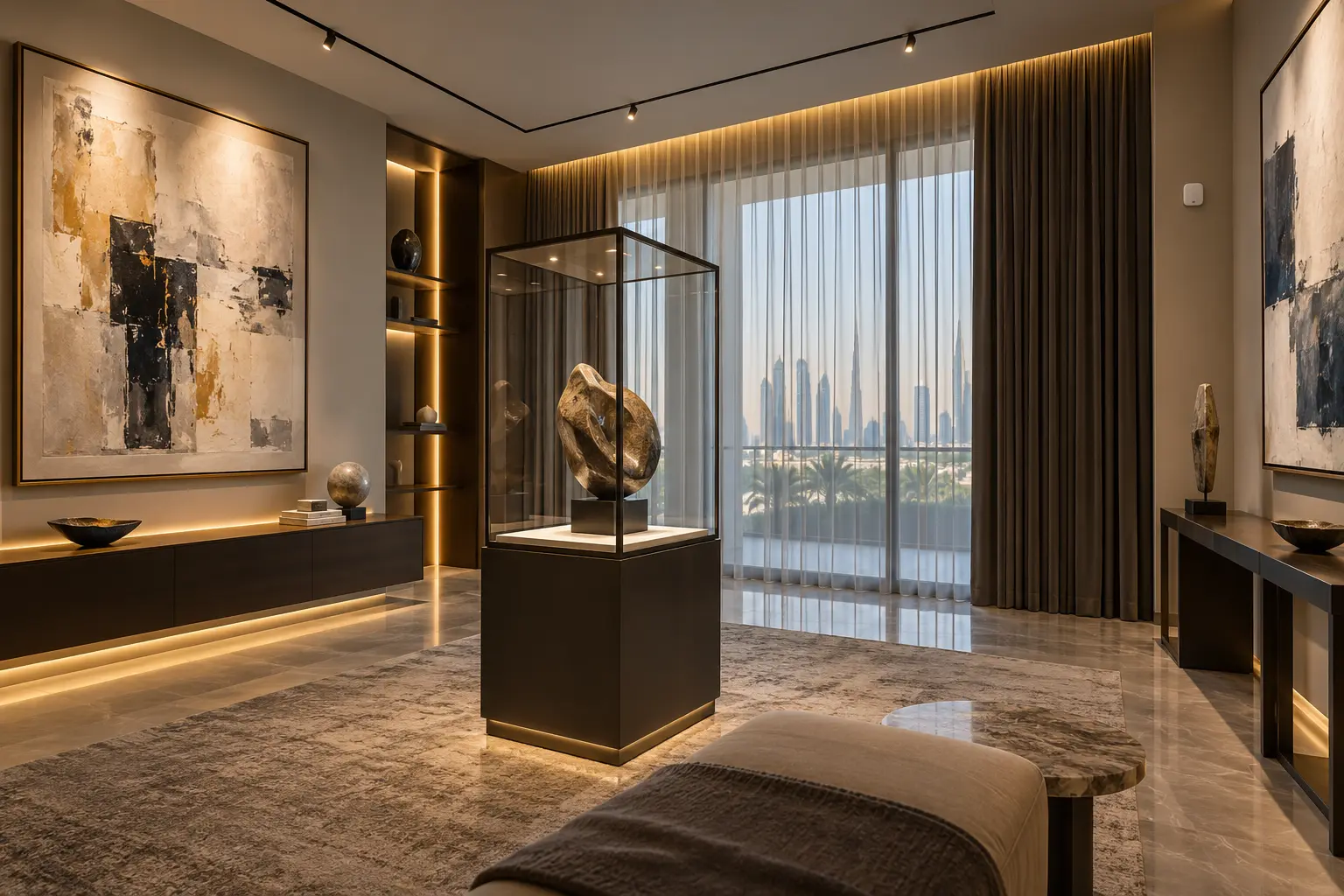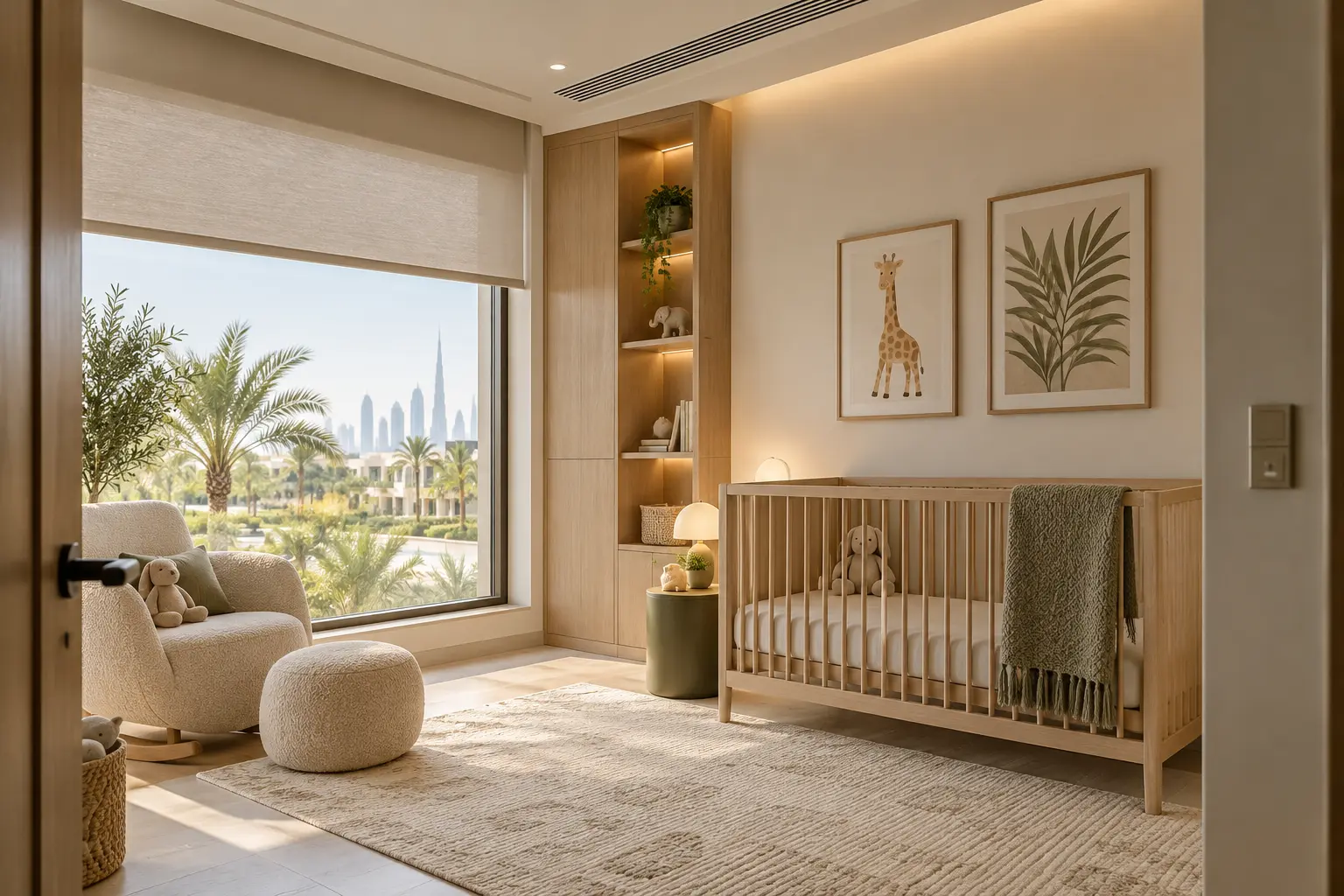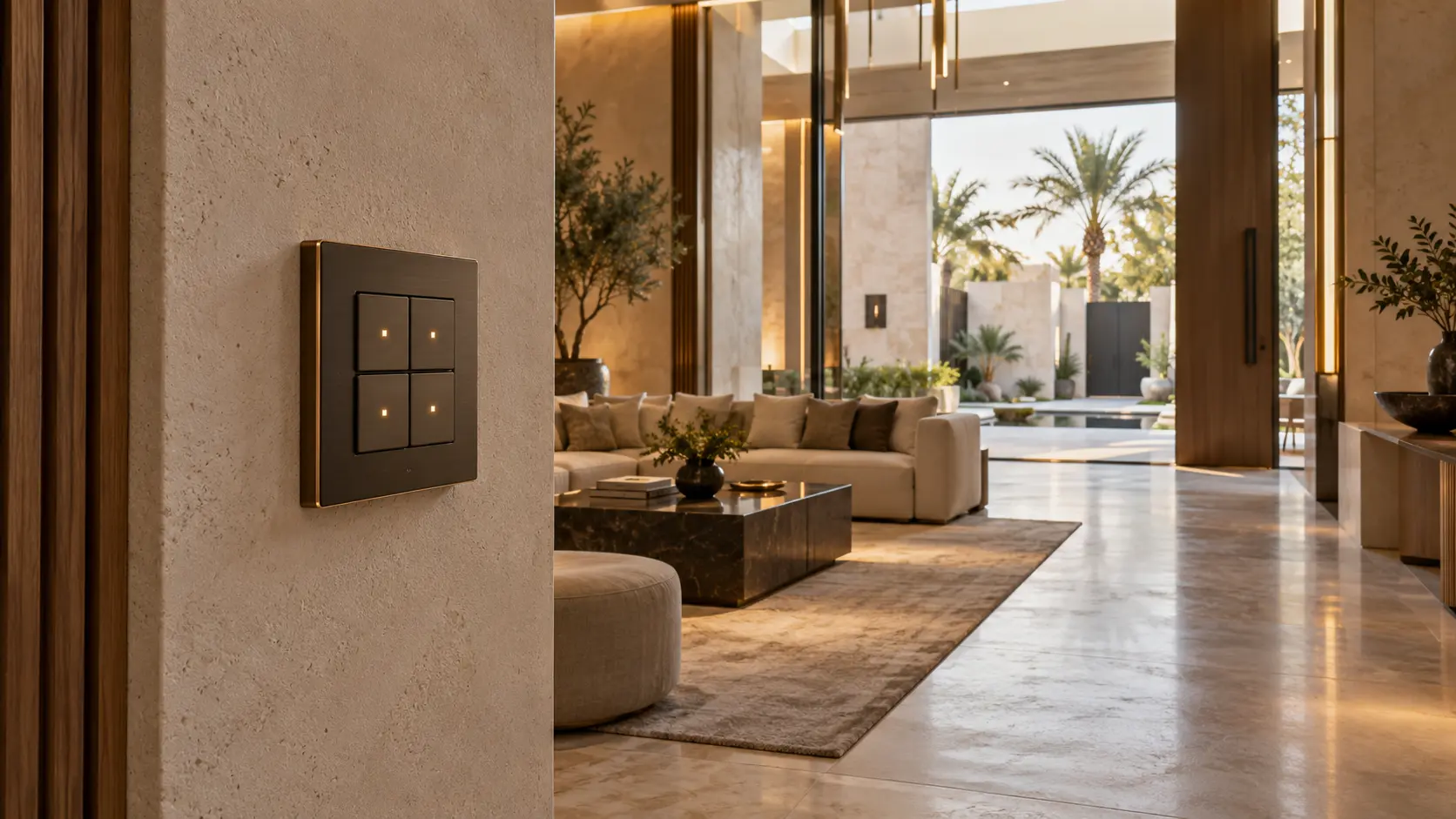
A smart bedroom should become quieter and easier to use, not turn bedtime into an app routine. The most useful design brings lighting, curtains or shades and AC control together around a few clear moments while preserving simple physical operation beside the bed and at the entrance.
This guide gives Dubai villa owners, interior designers and fit-out teams a room-by-room planning framework. Duneva's smart lighting planning service can help coordinate circuits, controls, shading and wider automation before the appointed electrical, HVAC and window-treatment specialists confirm their parts.
Describe the routine before the technology
Write down what normally happens when someone enters at night, reads, watches television, goes to sleep, wakes before sunrise and leaves the room. Include both sides of a shared bedroom because occupants may have different schedules. A useful brief explains the intended experience rather than asking for a smart master bedroom with every available feature.
Choose a small set of moments worth coordinating. Welcome might provide comfortable general light without opening a closed shade. Reading may use one bedside light without changing the other side. Goodnight may turn off agreed lights and close window treatments, while leaving the corridor or bathroom route available. Morning may open selected coverings only after an agreed time.
Every routine needs a clear boundary. It should not change another bedroom, arm a security system unexpectedly or alter a whole-villa AC schedule without deliberate approval.
Build physical control around where people reach
Provide useful controls at the bedroom entrance and each occupied bedside. Decide the priority at each position rather than copying the same long button list everywhere. Entrance controls often need general lighting, curtains and an all-off action; a bedside may need reading, low path light, blackout and a room-only goodnight.
Use plain labels and consistent actions. A single press should have a predictable result, while press-and-hold or double-tap functions should be used sparingly and documented. The smart-home keypad planning guide offers a practical method for testing labels with someone who did not program the system.
Keep essential room use independent of a personal phone, voice assistant or cloud account. Guests, children and someone with a flat phone battery should still be able to turn on the lights, close the curtains and request an ordinary temperature adjustment.
Design lighting in layers
Separate the functions of ambient, task, accent and orientation lighting. A decorative pendant, cove, bedside reading light, wardrobe light and low-level path light do different jobs. Record which circuits are dimmable, what driver is proposed and who confirms compatibility before ceilings and joinery are closed.
Create scenes from those real circuits after their light levels can be seen in the finished room. Avoid using one guessed percentage across every fixture. Materials, lamp output and reflected light change the result. Commission evening scenes after dark and check them from the bed, doorway, dressing area and bathroom route.
Use the automated daylight and glare guide to coordinate daytime light with the façade and viewing positions. Bedroom scenes should respect manual overrides instead of repeatedly forcing a light or shade back to a schedule.
If the bedroom also supports exercise or recovery routines, map those requirements separately with the home-gym and wellness-room planning guide. It helps distinguish activity lighting, equipment, privacy and specialist wellness boundaries from ordinary bedroom scenes.
Treat blackout as an architectural detail
Blackout performance depends on more than fabric colour. The opening, pocket, side gaps, bottom detail, track or roller, fabric selection and surrounding light all affect the result. Agree whether the goal is privacy, glare reduction, room darkening or a stronger blackout condition, because those are not interchangeable promises.
Lutron's current motorized roller-shade guidance explains that channels can limit light entering around the edges of a blackout fabric. Its broader automated window-treatment overview distinguishes sheer, privacy and blackout fabrics. These are useful design references, not proof that a particular bedroom detail will perform the same way. Confirm the selected system, dimensions, fabric, channels and installation tolerances in the project specification.
Coordinate pockets, tracks, power, motor side, curtain stack and access panels early. The motorized curtain-pocket planning guide provides a pre-close checklist. A silent-looking ceiling detail that cannot be serviced is not a complete solution.
Keep shade movement calm and recoverable
Set clear priorities for automatic and manual commands. A morning schedule may open sheers while keeping blackout curtains closed until the occupant presses a button. A goodnight scene may close the agreed layers, but it should stop safely and provide local control if an obstruction or alignment issue occurs.
Discuss motor noise, movement time and grouping using the exact selected products. Do not promise silent operation or perfect synchronisation without the manufacturer data and an installed demonstration. Provide a safe process for isolating or servicing a failed motor without disabling unrelated room functions.
Coordinate AC without taking over the HVAC design
The room control may present temperature, fan or mode options, but the HVAC specialist must confirm what the installed system supports. Record the thermostat or interface, cooling zone, sensor location, allowed setpoint range and the party responsible for commissioning. Avoid placing the sensed temperature where direct sun, supply air or concealed heat creates a misleading reading.
Control4's current climate and comfort overview shows how supported lighting, shades and temperature can be combined in routines and controlled from room interfaces. That describes a platform approach, not automatic compatibility with every Dubai villa AC system. Use the smart AC compatibility guide to check interfaces, zones and fallback before promising integrated control.
A night scene should not fight a building-management schedule or cycle equipment outside the approved operating strategy. Define which system owns the schedule and what happens after a power restart or manual thermostat change.
Protect sleep from unnecessary notifications
A bedroom interface should show only the information needed there. Security, leak or equipment alerts may be important, but routine door, motion and service notifications can be directed to owner devices or another agreed display. Decide which urgent conditions may interrupt a night scene and which should wait.
If voice control is included, list the exact bedroom commands and the accounts they use. The voice-control and privacy planning guide helps identify microphones, personal results, household permissions and physical alternatives. Do not make a private room dependent on a permanently listening interface when the occupants do not want one.
Plan failure and manual recovery
Ask what remains usable if the internet is down, the automation controller restarts, a shade motor fails or a keypad loses communication. Essential local lighting control and safe HVAC operation should have documented fallbacks agreed by the relevant specialists. A smart scene must not be the only way to make the room usable.
Include bedroom controls in the smart-home power-resilience plan where appropriate. Test recovery using an agreed method; do not disconnect live equipment or override HVAC protections simply to demonstrate an outage.
Commission at the times the room is used
Run separate daytime, evening, bedtime and early-morning checks. Invite the intended occupants to use the entrance and bedside controls without coaching. Confirm reading light direction, lowest comfortable levels, curtain closure, manual stops, temperature display, response time and whether a scene disturbs the other side of the room.
At handover, retain the circuit and keypad schedule, scene descriptions, shade and motor details, AC interface boundaries, sensor locations, owner accounts, manual controls, known limitations and support responsibility. Photograph concealed service access before it is closed, without publishing private room or security details.
A successful smart bedroom feels ordinary in the best way: the right control is within reach, movement is predictable and nobody has to find an app in the dark.
Request a smart-bedroom planning assessment with the property stage, room type, window treatments and current lighting or AC controls. Do not send access credentials or detailed private-room plans in the initial enquiry.