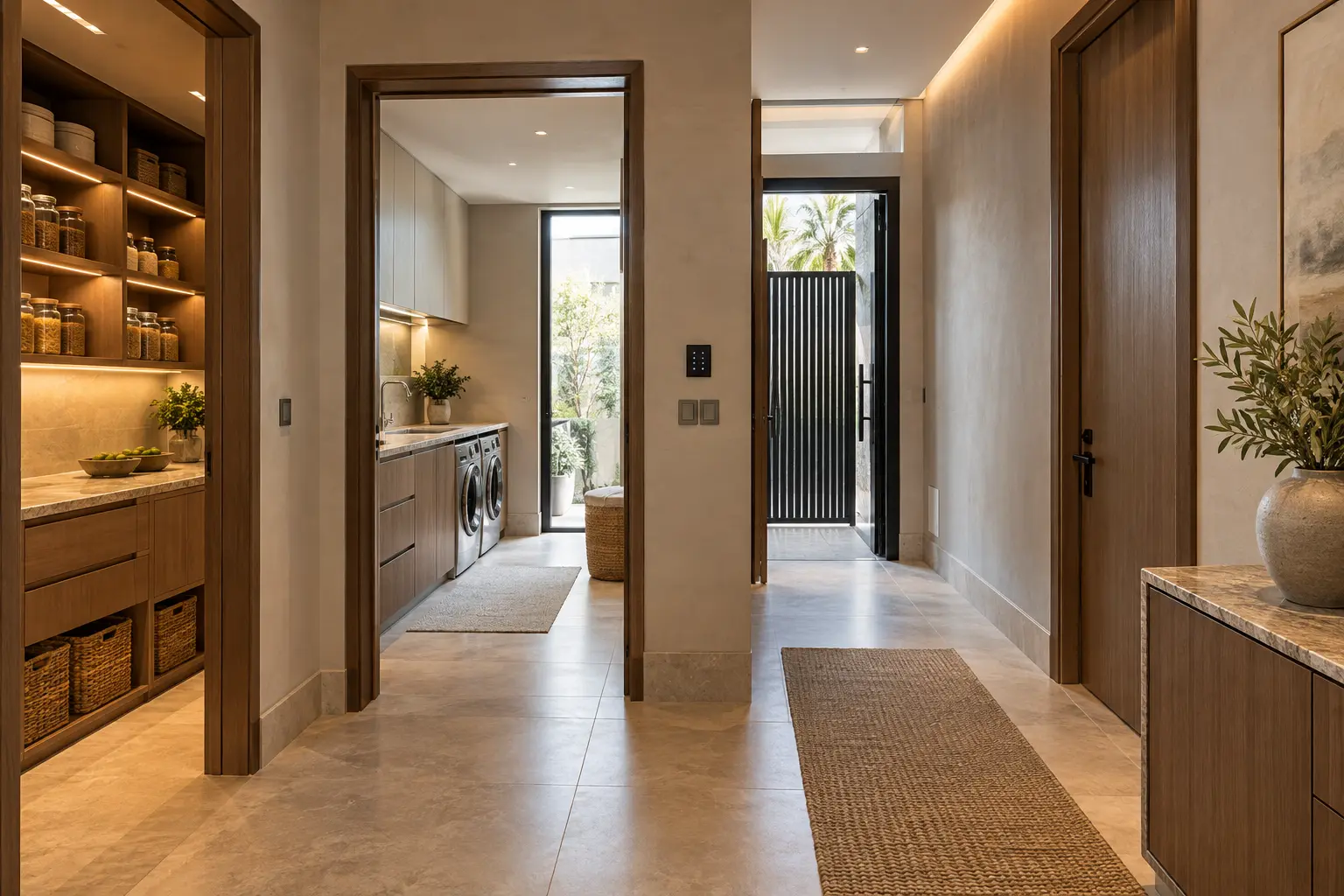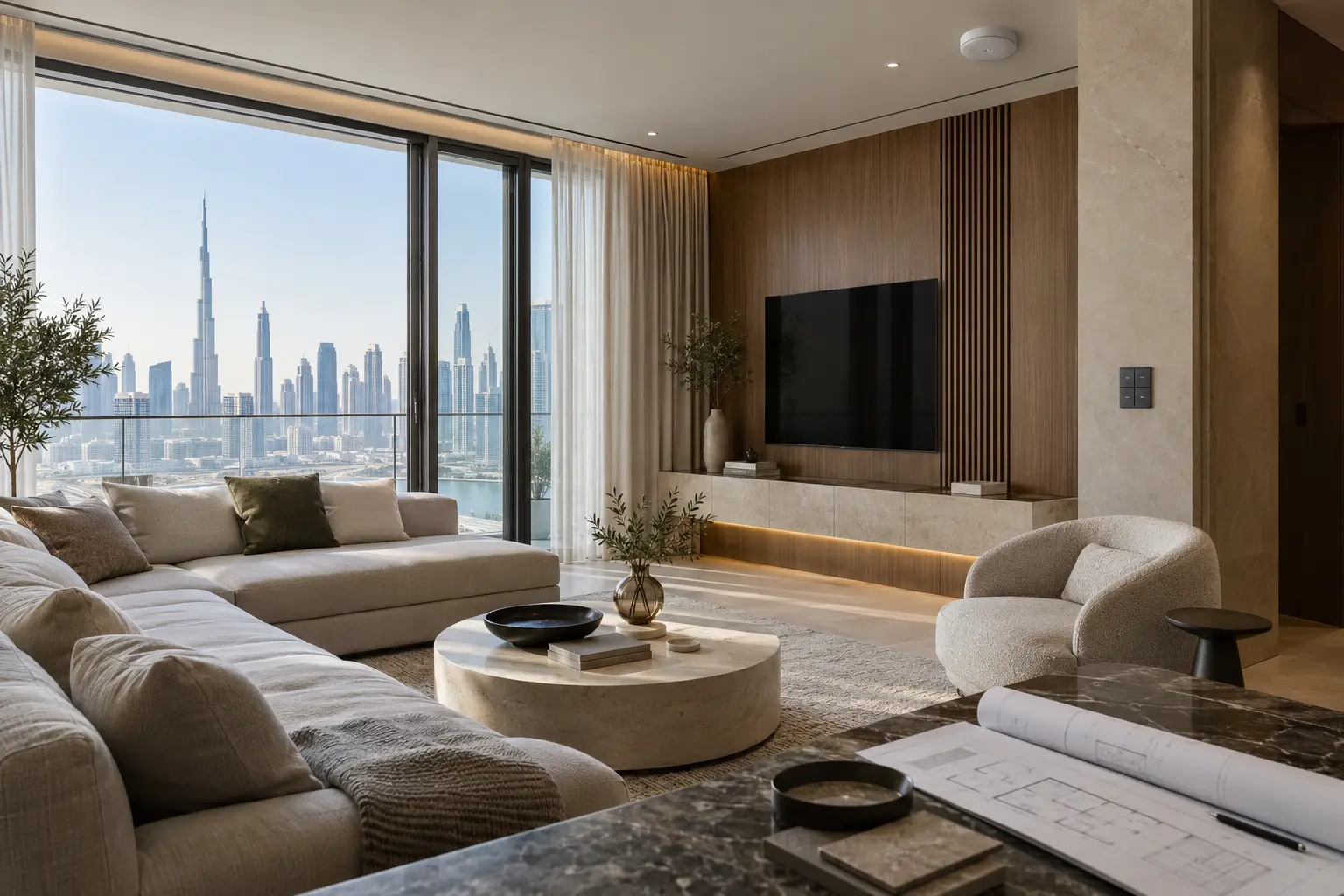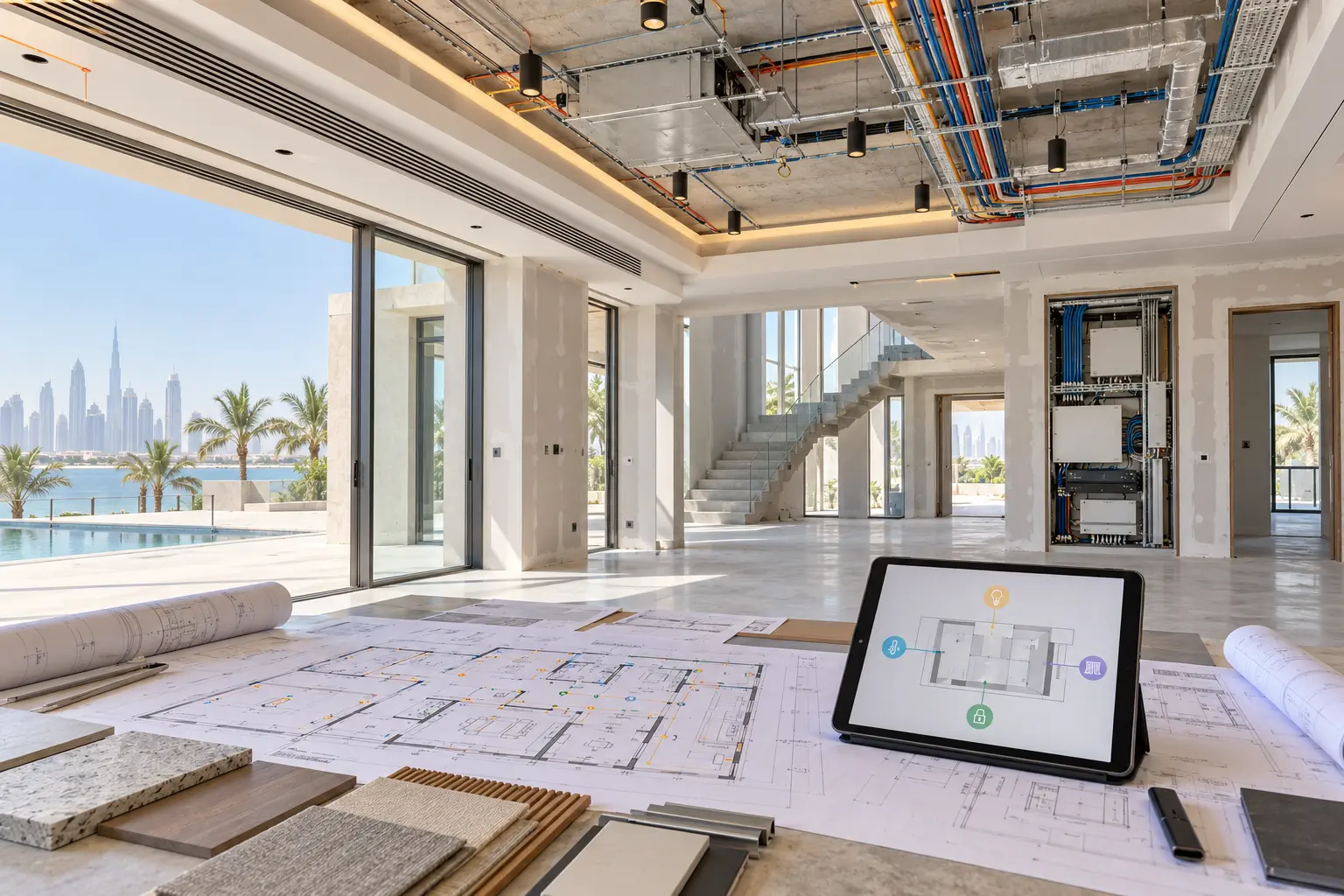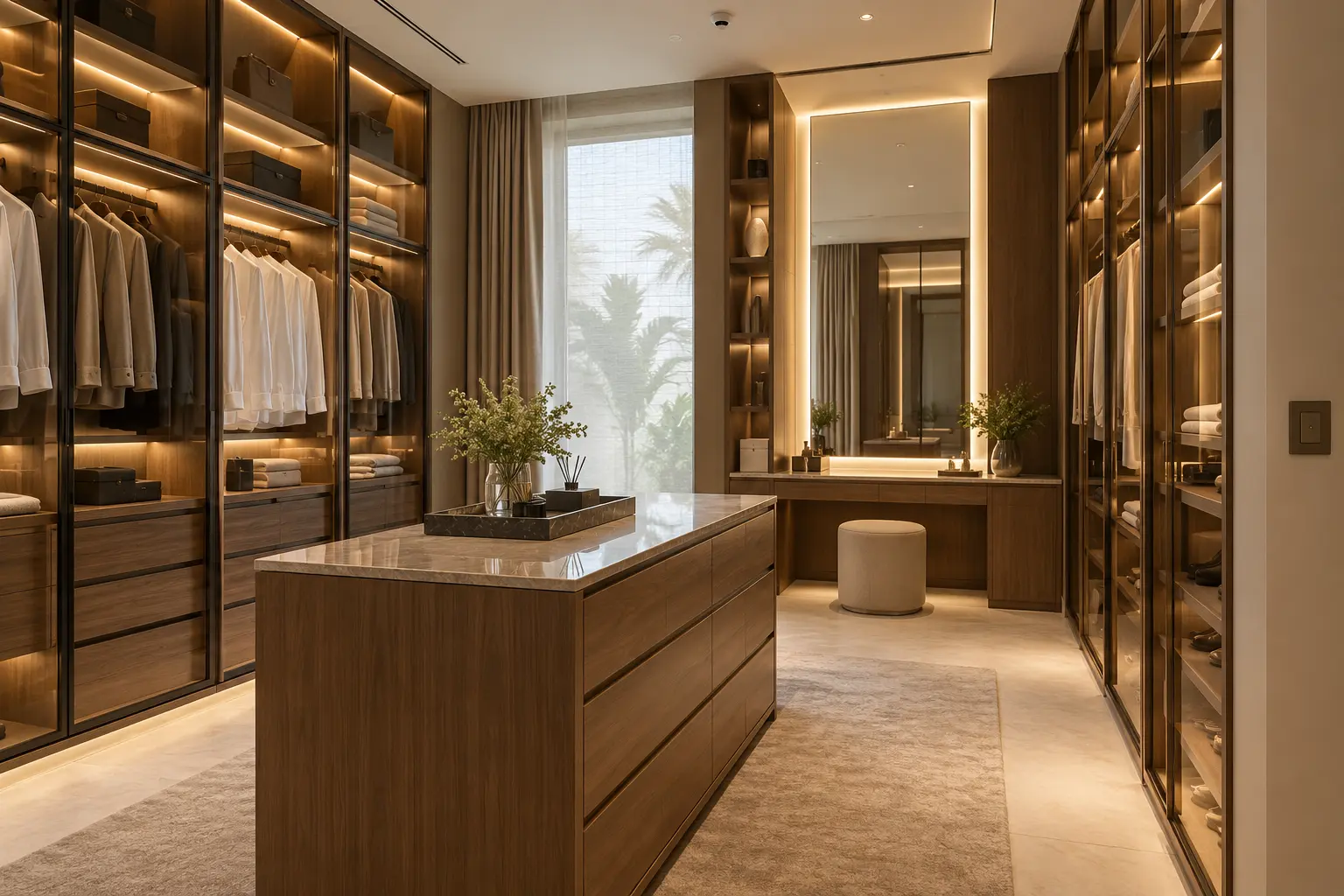
A dressing room works best when the joinery, lighting, mirrors, curtains, climate and controls are planned together. Automation can make short visits easier, protect sleep routines and reduce lights left on, but it cannot correct shadowed shelves, inaccessible drivers or an overfilled wardrobe. The useful starting point is the owner's daily sequence, not a list of devices.
This guide helps Dubai villa owners, interior designers, joinery teams and fit-out contractors coordinate the room before fabrication. Duneva's villa home-automation planning service can organise approved interfaces while the lighting designer, joiner, electrical contractor, curtain supplier and HVAC specialist remain responsible for their systems.
Map the way the room is actually used
Write down the real journeys: arriving from the bedroom at night, choosing clothes in the morning, using the mirror, packing luggage, accessing jewellery or watch storage, cleaning the room and closing it before sleep. Note whether two people need independent areas and whether staff may enter for laundry or wardrobe care.
Turn those journeys into a few understandable modes. Morning may open selected curtains and provide clear wardrobe and mirror light. Evening may keep light warm and restrained. Packing may raise general and shelf lighting for a limited period. Cleaning can provide full output without exposing private drawers or changing bedroom scenes.
Keep the labels obvious. Dress, Mirror, Packing and Off are easier to understand than an unlabeled touchscreen page. The smart-home keypad planning guide explains how to prototype button names and test the complete journey before engraving.
Freeze joinery and lighting as one coordinated drawing
Create elevations for hanging rails, shelves, drawers, shoe storage, luggage bays, mirrors, doors and access panels. Add every lighting channel, driver, sensor, keypad, socket and cable route to the same drawing. Check drawer and door movement at full extension; a wardrobe door should not block a sensor, control or service panel.
Decide whether light is needed at the front edge, within each bay, under a shelf or around a mirror. Deep dark finishes absorb light, while polished surfaces can produce glare. Lighting inside a glass-fronted display needs a different aim from task lighting inside everyday storage. Ask the lighting designer to review beam direction, colour quality, dimming range and heat, not only the decorative appearance.
Drivers and control gear need ventilation and service access. Do not bury them behind permanent backs or filled drawers. Record the route and spare capacity before the joinery closes, using the smart-home prewire checklist as a coordination reference.
Choose sensors for the room, not the brochure
Hands-free lighting can help when someone enters carrying clothes, but the sensor must see useful presence as well as movement through the door. Test somebody standing at the mirror, browsing a rail and sitting at the island. A sensor that times out while a person is still may be more frustrating than a normal switch.
Lutron's current sensor and timer guidance gives a closet example in which a timed control switches light off after the selected period. This is a product-specific planning example, not a compatibility promise. Sensor type, field of view, time delay, manual control and load compatibility must be confirmed for the selected system.
Decide between automatic-on, manual-on with automatic-off and door-triggered light for each zone. An open wardrobe door may justify local shelf light without turning on the whole room. A dressing room beside a sleeping area may need manual-on at night so movement does not create a bright surprise. Always provide an obvious local override.
Coordinate daylight, privacy and mirror use
A window can improve colour judgement and comfort, but it also creates privacy, glare and heat questions. Record the façade, nearby views, sunrise and afternoon conditions, mirror position and fabric purpose. A sheer treatment, blackout curtain and decorative drape have different functions; do not ask one fabric to solve every condition.
Lutron describes HomeWorks as coordinating lighting, window treatments and keypads, and its current residential system overview provides examples of lighting and shade control. Treat those as one ecosystem's capabilities. The exact motor, fabric, power, pocket, control interface and UAE availability require project confirmation.
Set priorities before adding automatic shade movement. Privacy must not be defeated by a daylight routine. A mirror scene should avoid closing a treatment unexpectedly while someone is using the room. The daylight and glare-control guide provides a façade-by-façade commissioning method.
Keep climate and specialist storage boundaries clear
The dressing room may feel different from the bedroom because of closed joinery, lighting heat, occupancy and limited air movement. Ask the HVAC specialist to confirm the room sensor, supply and return-air paths, door undercuts, approved setpoint range and whether a separate zone is justified. Automation may request an approved comfort mode, but it should not override plant protections or make unverified humidity claims.
If leather goods, watches, jewellery or other collections need controlled storage, appoint the relevant specialist and document the equipment separately. A display cabinet's internal conditions cannot be inferred from the room thermostat. Do not advertise preservation, security or insurance outcomes from a generic sensor.
Keep scents, steamers and heated styling equipment outside automated routines unless the exact appliance and electrical specialist explicitly support that use. High-load or heat-producing devices should not be left on through a casual scene or generic smart plug.
Design privacy and permissions deliberately
A dressing room can contain sensitive belongings and personal routines. Decide who may see room status, operate private drawers, review access events or receive alerts. Household staff may need lighting and curtain controls without access to cameras, security logs or owner profiles. Guests should be able to use essential lights locally without joining the private home network.
Avoid cameras in private dressing areas. If access-controlled storage is proposed, keep the lock supplier's approved release, emergency and battery procedures independent. Show only the minimum useful information on shared touchscreens. The voice-control and privacy guide helps define suitable rooms, history settings and physical fallbacks.
Plan power, network and maintenance
Schedule lighting circuits, drivers, curtain motors, sensors, keypads, access hardware and any connected mirrors or displays. Label isolators and keep them reachable. Decide what should return automatically after a power interruption and what needs manual confirmation. The bedroom and route lighting must remain understandable if the controller, network or internet is unavailable.
Most lighting and shade actions should not depend on cloud access. Where an app or voice assistant is included, record the account owner, regional availability, subscription conditions and offline behaviour. Follow the villa Wi-Fi planning checklist for coverage and owner-controlled credentials.
Add driver inspection, sensor cleaning, curtain checks and battery replacements to the smart-home maintenance calendar. Keep finish samples, lighting schedules, product models and programming records together so later joinery changes do not damage concealed equipment.
Commission with finished clothes, mirrors and curtains
Test the room after wardrobes are filled and all doors, mirrors, curtains and furniture are in place. Walk Morning, Evening, Packing, Cleaning and Off journeys. Confirm sensor coverage, manual overrides, dimming, mirror glare, privacy, independent partner controls, curtain movement, network loss and power restoration.
At handover, retain the coordinated elevations, circuits, driver locations, lighting channels, sensor positions and timeouts, shade limits, control labels, permissions, HVAC boundary, account ownership, local fallbacks and maintenance tasks. Add them to the smart-home handover checklist.
A successful smart dressing room is quiet and predictable. The light is where it is needed, privacy wins over convenience, every control has a clear purpose and the joinery can be serviced without dismantling the room.
Request a dressing-room and wardrobe planning assessment with the villa stage, room plan and preliminary joinery elevations. Do not include access codes, security details or private collection inventories in the initial enquiry.